Cookies Policy
The website need some cookies and similar means to function. If you permit us, we will use those means to collect data on your visits for aggregated statistics to improve our service. Find out More
Accept Reject
  • Menu
Facts & Numbers
000
Presentation

Telecommunications and Multimedia

At CTM, our vision is to promote a lively and sustainable world where networked intelligence enables ubiquitous interaction with sensory-rich content. Our mission is to develop advanced systems and technologies to enable high capacity, efficient, and secure communications, media knowledge extraction, and immersive ubiquitous multimedia applications.

We work in 4 main areas of research: Optical and Electronic Technologies, Wireless Networks, Multimedia and Communications Technologies, and VCMI (Visual Computing and Machine Intelligence).

Latest News
Communications

INESC TEC anticipates the future of connectivity with validation of intelligent surface demonstrator

INESC TEC has developed a demonstrator that showcases what the next generation of connectivity could look like: walls, windows or furniture capable of helping devices communicate more efficiently. This technology is part of the European project SUPERIOT and has already been successfully tested, opening new possibilities for smart buildings, industrial automation, logistics and highly reliable indoor communications.

15th December 2025

Communications

INESC TEC’s new multimedia search methods highlighted at international conferences

INESC TEC researcher Luís Vilaça has been recognised by the international scientific community after presenting two papers at two of the most prestigious conferences in the multimedia field, both held in Dublin: the IEEE International Conference on Content-Based Multimedia Indexing (CBMI) and ACM Multimedia – the latter classified as A*, the highest level of scientific excellence. The papers explore new methods for searching and recommending audiovisual content that use the video itself to create richer semantic descriptions.

24th November 2025

Communications

INESC TEC hosted a Summer School that combined theory with practice to advance knowledge on 6G networks

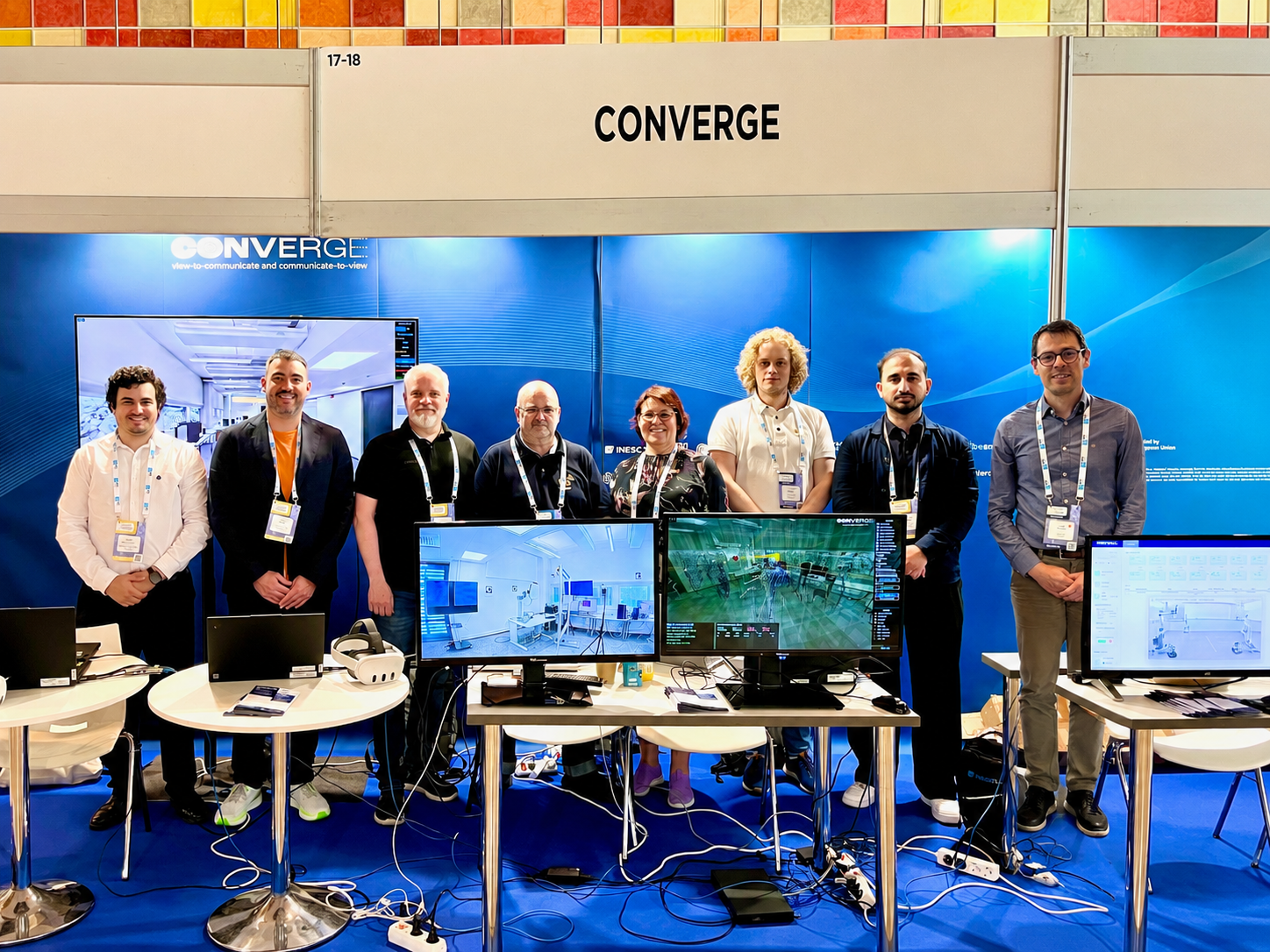
Three days, 70 participants, a team of six tutors, and more than 10 internationally renowned speakers – this was the formula behind the Summer School, jointly organised by the projects CONVERGE (led by INESC TEC) and SLICES-PP. INESC TEC hosted this Summer School, which offered participants a hands-on experience in the development and testing of next-generation 6G networks.

19th August 2025

Communications

Is it possible to make the invisible visible through a demonstration? With INESC TEC, yes: using mixed reality

INESC TEC took central stage at one of the largest meetings of 5G, IoT, and 6G experts. At the EuCNC & 6G Summit 2025, held in Poznan (Poland), the Institute made the invisible visible through a demonstration using mixed reality.

26th June 2025

Can we be sure that Douro wine really comes from the Douro? INESC TEC has the answer

Portuguese wine, Spanish honey, Greek olive oil, German meat, Nordic dairy and fish – what do they all have in common? They’re all part of WATSON, a project bringing blockchain, Artificial Intelligence, computer vision, sensors, and geolocation systems to the table to improve the traceability of food products and help advance information and prevention to tackle fraud.

29th May 2025

Team
002

Laboratories

Laboratory of Sound and Music Computing

Optical and Electronic Technologies Research Laboratory

Publications

CTM Publications

View all Publications

2026

The 15-Minute City in Porto, Portugal: Accessibility for the elderly

Authors
Guerreiro, MS; Dinis, MAP; Sucena, S; Silva, I; Pereira, M; Ferreira, D; Moreira, RS;

Publication
CITIES

Abstract
The concept of the 15-Minute City aims to enhance urban accessibility by ensuring that essential services are within a short walking distance. This study evaluates the accessibility of Porto, Portugal, particularly for the elderly, by assessing urban density, permeability, and walkability, with a specific focus on crossings and ramps. A five-step methodology was employed, including spatial analysis using QGIS and Place Syntax Tool, proximity assessments, and an in-situ survey of crossings and ramps in the CHP. The results indicate that while the city of Porto offers a dense and walkable urban environment, significant accessibility challenges remain due to inadequate ramp distribution. The data collection identified 80 crossings, of which only 60 were listed in OpenStreetMap, highlighting data inconsistencies. Additionally, 18 crossings lacked curb ramps, posing mobility barriers for elderly residents. These findings highlight the need of infrastructure improvements to support inclusive urban mobility. The study also proposes an automated method to enhance ramp data collection for broader applications. Addressing these gaps is crucial for achieving the equity and sustainability goals of the 15-Minute City model, ensuring that aging populations can navigate urban spaces safely and efficiently.

2026

Deciphering the Silent Signals: Unveiling Frequency Importance for Wi-Fi-Based Human Pose Estimation with Explainability

Authors
Capozzi, L; Ferreira, L; Gonçalves, T; Rebelo, A; Cardoso, JS; Sequeira, AF;

Publication
PATTERN RECOGNITION AND IMAGE ANALYSIS, IBPRIA 2025, PT II

Abstract
The rapid advancement of wireless technologies, particularly Wi-Fi, has spurred significant research into indoor human activity detection across various domains (e.g., healthcare, security, and industry). This work explores the non-invasive and cost-effective Wi-Fi paradigm and the application of deep learning for human activity recognition using Wi-Fi signals. Focusing on the challenges in machine interpretability, motivated by the increase in data availability and computational power, this paper uses explainable artificial intelligence to understand the inner workings of transformer-based deep neural networks designed to estimate human pose (i.e., human skeleton key points) from Wi-Fi channel state information. Using different strategies to assess the most relevant sub-carriers (i.e., rollout attention and masking attention) for the model predictions, we evaluate the performance of the model when it uses a given number of sub-carriers as input, selected randomly or by ascending (high-attention) or descending (low-attention) order. We concluded that the models trained with fewer (but relevant) sub-carriers are competitive with the baseline (trained with all sub-carriers) but better in terms of computational efficiency (i.e., processing more data per second).

2026

Enhancing Medical Image Analysis: A Pipeline Combining Synthetic Image Generation and Super-Resolution

Authors
Sousa, P; Campai, D; Andrade, J; Pereira, P; Goncalves, T; Teixeira, LF; Pereira, T; Oliveira, HP;

Publication
PATTERN RECOGNITION AND IMAGE ANALYSIS, IBPRIA 2025, PT II

Abstract
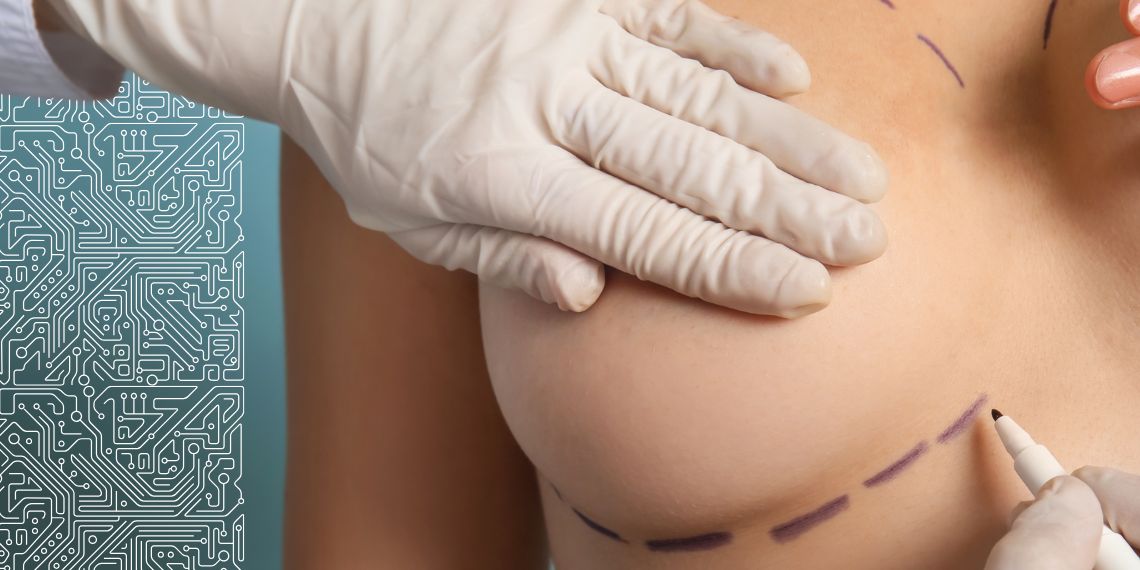
Cancer is a leading cause of mortality worldwide, with breast and lung cancer being the most prevalent globally. Early and accurate diagnosis is crucial for successful treatment, and medical imaging techniques play a pivotal role in achieving this. This paper proposes a novel pipeline that leverages generative artificial intelligence to enhance medical images by combining synthetic image generation and super-resolution techniques. The framework is validated in two medical use cases (breast and lung cancers), demonstrating its potential to improve the quality and quantity of medical imaging data, ultimately contributing to more precise and effective cancer diagnosis and treatment. Overall, although some limitations do exist, this paper achieved satisfactory results for an image size which is conductive to specialist analysis, and further expands upon this field's capabilities.

2026

Abnormal Human Behaviour Detection Using Normalising Flows and Attention Mechanisms

Authors
Nogueira, AFR; Oliveira, HP; Teixeira, LF;

Publication
PATTERN RECOGNITION AND IMAGE ANALYSIS, IBPRIA 2025, PT I

Abstract
The aim of this work is to explore normalising flows to detect anomalous behaviours which is an essential task mainly for surveillance systems-related applications. To accomplish that, a series of ablation studies were performed by varying the parameters of the Spatio-Temporal Graph Normalising Flows (STG-NF) model [3] and combining it with attention mechanisms. Out of all these experiments, it was only possible to improve the state-of-the-art result for the UBnormal dataset by 3.4 percentual points (pp), for the Avenue by 4.7 pp and for the Avenue-HR by 3.2 pp. However, further research remains urgent to find a model that can give the best performance across different scenarios. The inaccuracies of the pose tracking and estimation algorithm seems to be the main factor limiting the models' performance. The code is available at https://github.com/AnaFilipaNogueira/Abnormal-Human-Behaviour-Detection- using-Normalising-Flows-and- Attention-Mechanisms.

2026

Unsupervised contrastive analysis for anomaly detection in brain MRIs via conditional diffusion models

Authors
Patrício, C; Barbano, CA; Fiandrotti, A; Renzulli, R; Grangetto, M; Teixeira, LF; Neves, JC;

Publication
PATTERN RECOGNITION LETTERS

Abstract
Contrastive Analysis (CA) detects anomalies by contrasting patterns unique to a target group (e.g., unhealthy subjects) from those in a background group (e.g., healthy subjects). In the context of brain MRIs, existing CA approaches rely on supervised contrastive learning or variational autoencoders (VAEs) using both healthy and unhealthy data, but such reliance on target samples is challenging in clinical settings. Unsupervised Anomaly Detection (UAD) learns a reference representation of healthy anatomy, eliminating the need for target samples. Deviations from this reference distribution can indicate potential anomalies. In this context, diffusion models have been increasingly adopted in UAD due to their superior performance in image generation compared to VAEs. Nonetheless, precisely reconstructing the anatomy of the brain remains a challenge. In this work, we bridge CA and UAD by reformulating contrastive analysis principles for the unsupervised setting. We propose an unsupervised framework to improve the reconstruction quality by training a self-supervised contrastive encoder on healthy images to extract meaningful anatomical features. These features are used to condition a diffusion model to reconstruct the healthy appearance of a given image, enabling interpretable anomaly localization via pixel-wise comparison. We validate our approach through a proof-of-concept on a facial image dataset and further demonstrate its effectiveness on four brain MRI datasets, outperforming baseline methods in anomaly localization on the NOVA benchmark.

Facts & Figures

19Papers in indexed journals

2020

2R&D Employees

2020

11Proceedings in indexed conferences

2020

Contacts