Cookies
O website necessita de alguns cookies e outros recursos semelhantes para funcionar. Caso o permita, o INESC TEC irá utilizar cookies para recolher dados sobre as suas visitas, contribuindo, assim, para estatísticas agregadas que permitem melhorar o nosso serviço. Ver mais
Aceitar Rejeitar
  • Menu
Apresentação

Telecomunicações e Multimédia

O Centro de Telecomunicações e Multimédia (CTM) do INESC TEC integra cerca de 200 colaboradores, incluindo pelo menos uma centena de investigadores integrados com atividade científica nos domínios das comunicações, inteligência artificial e ciências da computação e engenharia.


A atividade do centro organiza-se nas seguintes linhas de Investigação e Desenvolvimento (I&D):

  • Comunicações e Eletrónica
    • Tecnologias de rádio frequência
    • Optoeletrónica
    • Microeletrónica
    • Redes de comunicações sem fios
  • Perceção por computador
    • Visão por computador aplicada à Imagem médica
    • Visão por computador aplicada aos media digitais
    • Áudio por computador aplicado à música

Com equipas multidisciplinares que integram dezenas de doutoramentos, o centro aposta em projetos de investigação europeus e nacionais e em projetos de consultoria com a indústria.
notícias
Comunicações

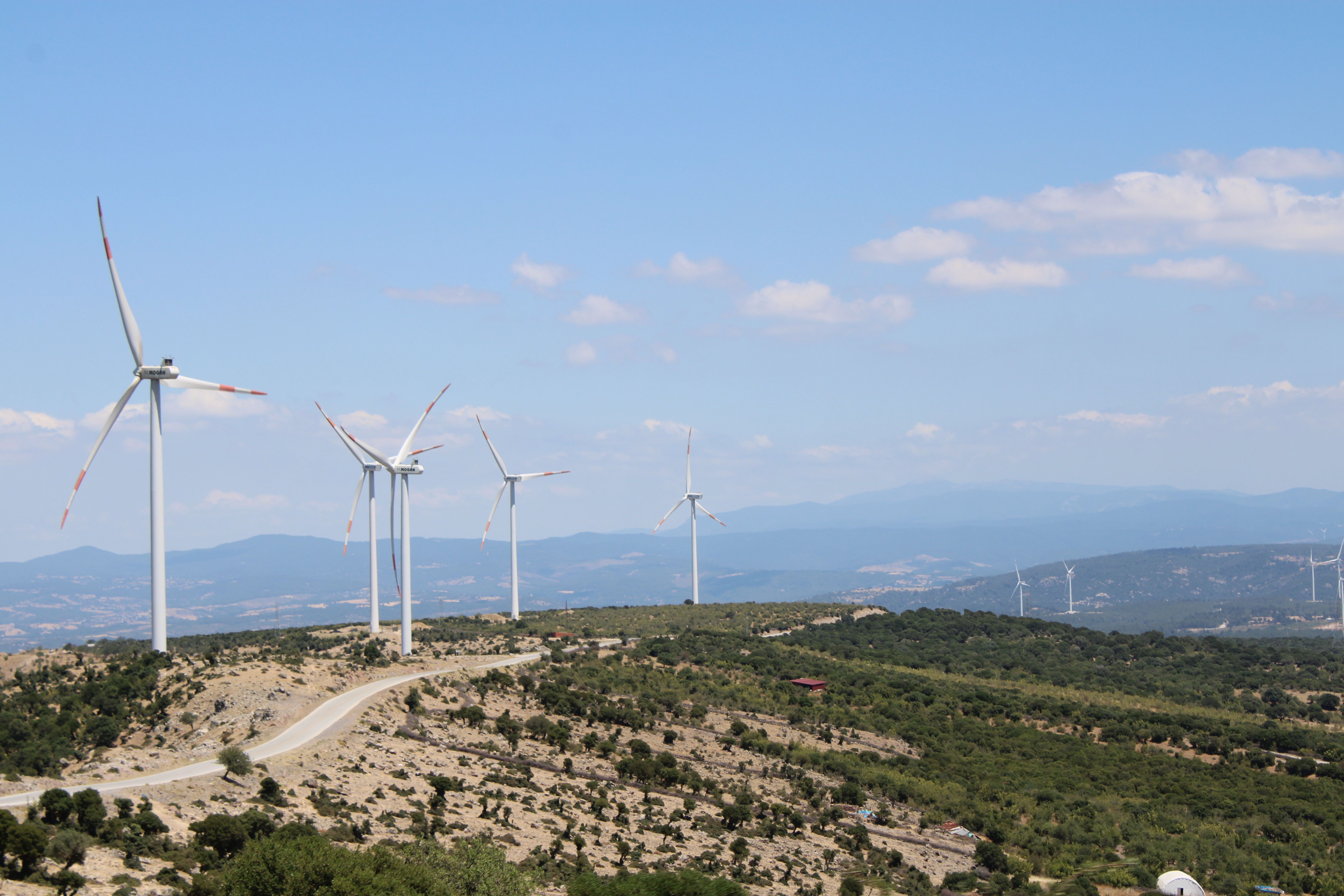
INESC TEC em novo projeto para desenvolver plataforma inteligente de monitorização de pás de turbinas eólicas

Chama-se FS.AI4WIND (da sigla Fibersail Advanced Intelligence for WIND Energy) o projeto P2030, orçado em 1,26M€, que junta o INESC TEC e a empresa Fibersail para desenvolver uma plataforma inteligente de monitorização em tempo real de pás de turbinas eólicas, baseada em sensorização e algoritmos de IA.

03 julho 2026

Comunicações

INESC TEC demonstra Célula Móvel 5G no Porto de Sines

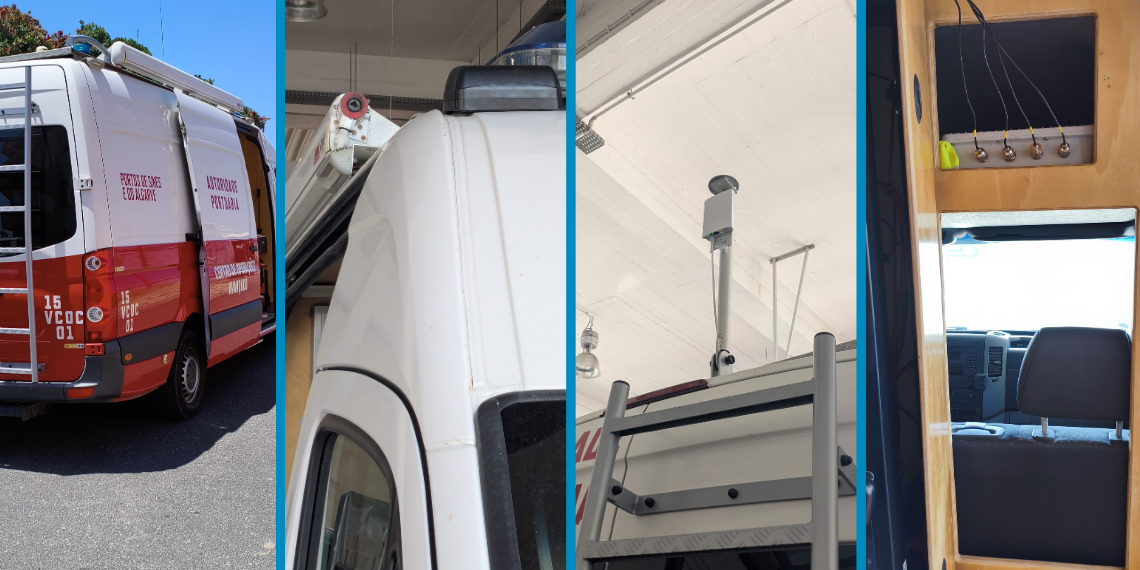
O projeto NEXUS, no qual o INESC TEC participa, teve recentemente a sua demonstração final no Porto de Sines e os investigadores do Instituto conseguiram testar uma Célula Móvel 5G com sucesso, contribuindo, assim, para uma solução inovadora no que à rede 5G diz respeito.

02 julho 2026

Comunicações

INESC TEC foi a Málaga com duas demonstrações, dois workshops e várias contribuições científicas na área das comunicações

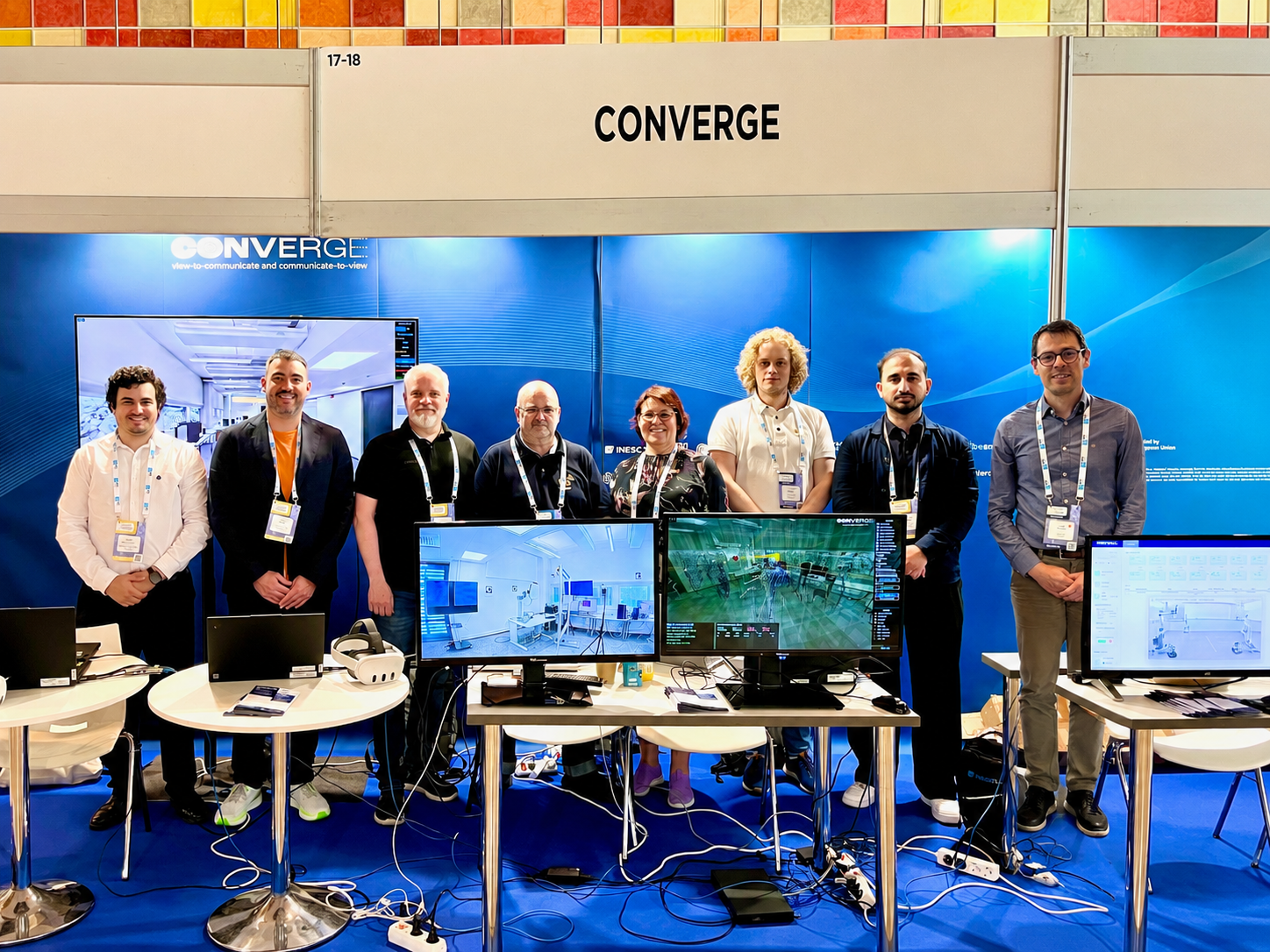
O INESC TEC voltou a marcar presença na conferência internacional EuCNC & 6G Summit, que este ano se realizou em Málaga (Espanha). Os investigadores do Instituto montaram duas demonstrações – no âmbito de projetos europeus liderados pelo INESC TEC, o CONVERGE e o TERRAMETA -, organizaram dois workshops, apresentaram dois artigos científicos, um poster e um deles foi ainda co-chair de uma sessão.

30 junho 2026

Comunicações

Há novas ferramentas de IA para gerar dados sintéticos no diagnóstico do cancro do pulmão e o INESC TEC está a desenvolvê-las

São quatro as tecnologias que os investigadores do INESC TEC envolvidos no projeto europeu Phase IV AI desenvolveram, abrindo caminho para melhores sistemas de diagnóstico, sem comprometer a privacidade dos doentes. As ferramentas baseadas em Inteligência Artificial (IA) são capazes de gerar imagens médicas sintéticas de alta qualidade.

11 março 2026

Inteligência Artificial

Mais informação, melhor decisão: a inteligência artificial que antecipa resultados da cirurgia ao cancro da mama

Não se trata do conto de fadas, mas o projeto CINDERELLA também faz magia quando o tema é o tratamento do cancro da mama. Arrancou há quatro anos, e a aproximar-se da reta final, há já um conjunto de ferramentas desenvolvidas para apoiar pacientes e médicos a antecipar, de forma realista, as alterações físicas decorrentes da cirurgia após tratamento do cancro da mama.

25 fevereiro 2026

Tópicos
de interesse
039

Projetos em destaque

AGROBOOST

Agricultural Ground-bReaking sOlutions based on roBtics and augmented reality for boOsting sOcial sustainability and competitivenesS while increasing the safeTy of workers

2025-2030

OGS

Portuguese Optical Ground Station

2025-2026

MechEye

Industrial Machine Sentinel

2025-2025

POEMS

PORTUGUESE COMPETENCE CENTRE IN SEMICONDUCTORS

2025-2029

AIMaCoV

Mapeamento e Compilação via AI para CGRAs em Sistemas RISC-V

2025-2027

HURRICANE

Holistic UGV-based Resilient and Real-time Intelligence for Crisis And Natural Emergency

2025-2028

FALCON

Zero-Touch Flying Networks Using Multimodal Large Language Model Based Agents

2025-2026

STREAM

Smart Tracking and Real-time Enhanced Asset Management

2025-2027

GEOSENSE

Polarization Harnessing in Submarine Optical Cables for Global Geophysical Sensing

2025-2026

TestBed5G_1

Primeiros Pilotos TestBed 5G

2024-2026

EPICURE

High-level specialised application support service in High-Performance Computing (HPC)

2024-2028

AI4LUNGS

AI-BASED PERSONALISED CARE FOR RESPIRATORY DISEASE USING MULTI-MODAL DATA IN PATIENT STRATIFICATION

2024-2027

OPITDEV

O-PITDEV – redesign of product electronics

2024-2026

PHASE IV AI

Privacy compliant health data as a service for AI development

2023-2026

UNIFY

Compilation Abstraction and Hardware Adaptation for Specialized and General-Purpose Computing Unification

2023-2026

CELLO

The sound of cells: An acoustic platform aiming towards biophysical cell fingerprints for label-free precision medicine

2023-2026

WATSON

A holistic framework with Anticounterfeit and Intelligence-based technologies that will assist food chain stakeholders in rapidly identifying and preventing the spread of fraudulent practices

2023-2026

CONVERGE

Telecommunications and computer vision convergence tools for research infrastructures

2023-2026

EADIGIFOLK

An European and Ibero-American approach for the digital collection, analysis and dissemination of folk music

2023-2026

A-IQ Ready

Artificial Intelligence using Quantum measured Information for realtime distributed systems at the edge

2023-2026

SuperIoT

Truly sustainable printed electronics-based IoT combining optical and radio wireless technologies

2023-2025

TERRAMETA

Terahertz reconfigurable metasurfaces for ultra-high rate wireless communications

2023-2026

AEROGANP

Creación de un eje transfronterizo de investigación y transferencia de conocimiento en el sector aeronáutico y espacial en la Eurorregión Galicia-Norte de Portugal

2023-2026

A-MoVeR

Mobilizing Agenda for the Development of Products & Systems towards an Intelligent and Green Mobility

2022-2026

OVERWATCH

Integrated holographic management map for safety and crisis events

2022-2026

NEXUS

Innovation Pact - Digital and Green Transition

2022-2026

NewSpacePortugal

Agenda New Space Portugal

2022-2026

SUSTAINABLE PLASTICS

Agenda Mobilizadora para os Plásticos Sustentáveis

2022-2026

Produtech_R3

Agenda Mobilizadora da Fileira das Tecnologias de Produção para a Reindustrialização

2022-2026

CINDERELLA

Clinical Validation of an AI-based approach to improve the shared decision-making process and outcomes in Breast Cancer Patients proposed for Locoregional treatment

2022-2026

FORM_I40

Formação Indústria 4.0

2022-2022

THEIA

Automated Perception Driving

2022-2023

HfPT

Health from Portugal

2021-2026

iiLab

Ampliação da Infraestrutura Tecnológica do INESC TEC para a Transformação Digital da Indústria

2020-2023

TAMI

Transparent Artificial Medical Intelligence

2020-2023

InterConnect

Interoperable Solutions Connecting Smart Homes, Buildings and Grids

2019-2024

FotoInMotion

Repurposing and enriching images for immersive storytelling through smart digital tools

2018-2020

CHIC

Cooperative Holistic view on Internet and Content

2017-2020

Convergence

Abordagem inovadora centrada em conteúdos para complementar e melhorar a arquitectura actual da Internet

2010-2013

Equipa
  • a
  • b
  • c
  • d
  • e
  • f
  • g
  • h
  • i
  • j
  • k
  • l
  • m
  • n
  • o
  • p
  • q
  • r
  • s
  • t
  • u
  • v
  • w
  • x
  • y
  • z
Publicações

2026

RIoT Digital Twin: Modeling, Deployment, and Optimization of Reconfigurable IoT System With OpticalRadio Wireless Integration

Autores
Abdellatif, AA; Silva, S; Baltazar, E; Oliveira, B; Qiu, SH; Bocus, MJ; Eder, K; Piechocki, RJ; Almeida, NT; Fontes, H;

Publicação
IEEE OPEN JOURNAL OF THE COMMUNICATIONS SOCIETY

Abstract
This paper proposes an optimized Reconfigurable Internet of Things (RIoT) framework that integrates optical and radio wireless technologies with a focus on energy efficiency, scalability, and adaptability. To address the inherent complexity of hybrid optical-radio environments, a high-fidelity Digital Twin (DT) is developed within the Network Simulator 3 (NS-3) platform. The DT models deploy subsystems of the RIoT architecture, including Radio Frequency (RF) communication, Optical Wireless Communication (OWC), and energy harvesting and consumption mechanisms that enable autonomous operation. Real-time energy and power measurements from target hardware platforms are also incorporated to ensure accurate representation of physical behavior and enable runtime analysis and optimization. Building on this foundation, a proactive cross-layer optimization strategy is devised to balance energy efficiency and quality of service (QoS). The strategy dynamically reconfigures RIoT nodes by adapting transmission rates, wake/sleep scheduling, and access technology selection. Results demonstrate that the proposed framework, combining digital twin technology, hybrid optical-radio integration, and data-driven energy modeling, substantially enhances the performance, resilience, and sustainability of 6G IoT networks.

2026

Autonomous Vision-Aided UAV Positioning for Obstacle-Aware Wireless Connectivity

Autores
Shafafi, K; Ricardo, M; Campos, R;

Publicação
IEEE OPEN JOURNAL OF VEHICULAR TECHNOLOGY

Abstract
Unmanned Aerial Vehicles (UAVs) offer a promising solution for enhancing wireless connectivity and Quality of Service (QoS) in urban environments, acting as aerial Wi-Fi access points or cellular base stations to support vehicular users and Vehicle-to-Everything (V2X) applications. Their flexibility and rapid deployment capabilities make them suitable for addressing infrastructure gaps and traffic surges. However, optimizing UAV positions to maintain Line of Sight (LoS) links with ground User Equipment (UEs) remains challenging in obstacle-dense urban scenarios. Existing approaches rely on probabilistic blockage models or require dedicated infrastructure such as Reconfigurable Intelligent Surfaces. This paper proposes VTOPA, a Vision-Aided Traffic- and Obstacle-Aware Positioning Algorithm that complements these approaches by autonomously extracting environmental information-such as obstacle geometries and UE locations-via computer vision, enabling infrastructure-free deployment. The algorithm employs Particle Swarm Optimization to determine UAV positions that maximize aggregate throughput while prioritizing LoS connectivity and accounting for heterogeneous traffic demands. VTOPA is particularly suited for rapid deployment scenarios such as emergency response and temporary events. Evaluated through simulations in ns-3, VTOPA achieves up to 50% increase in aggregate throughput and 50% reduction in delay, outperforming state of the art benchmarks in obstacle-rich environments.

2026

Optimizing Mobile IAB Deployment and Scheduling in Obstruction-Prone 6G Seaport Networks

Autores
Correia, PF; Coelho, A; Ricardo, M;

Publicação
IEEE ACCESS

Abstract
Integrated Access and Backhaul (IAB) technology in cellular networks operating in the 3.x GHz band combines access and backhaul functionalities within a wireless framework, reducing dependence on fiber-based solutions and enabling cost-efficient, flexible network expansion. Deploying a mobile IAB (MIAB) in obstruction-prone environments, such as seaports, offers on-demand capacity and resilience but poses unique challenges due to severe shadowing from dense physical obstacles. This paper presents a three-dimensional, obstacle-aware model for optimal MIAB placement and scheduler selection in networks comprising user equipments (UEs) and fixed IABs (FIABs). We evaluate user and backhaul association patterns under different scheduling strategies, including Round-Robin (RR) and Weighted Round-Robin (WRR), ensuring that both MIABs and FIABs meet UE application-layer capacity demands without exceeding backhaul limits. A genetic algorithm (GA)-based optimizer is employed to explore deployment configurations under varying FIAB densities, number of UEs, and obstacles. Results show that MIAB assistance yields the greatest benefits in sparse FIAB networks and low-UE scenarios, with capacity gains reaching up to 350%. MIAB delivers the greatest added value in the presence of obstacles. In contrast, dense FIAB deployments exhibit diminishing returns from MIAB integration. Across most of the evaluated conditions, WRR outperforms RR by enabling fairer and more adaptive resource blocks (RBs) allocation. These findings provide practical guidance for targeted MIAB deployment strategies that balance infrastructure investment, environmental constraints, and scheduling policies.

2026

A Vision-Based Framework for Intelligent gNodeB Mobility Control

Autores
Duarte, P; Coelho, A; Ribeiro, FM; Teixeira, FB; Pessoa, LM; Ricardo, M;

Publicação
WCNC

Abstract
This paper proposes a vision-based framework for the intelligent control of mobile Open Radio Access Network (O-RAN) base stations (gNBs) operating in dynamic wireless environments. The framework comprises three innovative components. The first is the introduction of novel Service Models (SMs) within a vision-enabled O-RAN architecture, termed VisionRAN. These SMs extend state-of-the-art O-RAN-based architectures by enabling the transmission of vision-based sensing data and gNB positioning control messages. The second is an O-RAN xApp, VisionApp, which fuses vision and radio data, and uses this information to control the position of a mobile gNB, using a Deep Q-Network (DQN). The third is a digital twin environment, VisionTwin, which incorporates vision data and can emulate realistic wireless scenarios; this digital twin was used to train the DQN running in VisionApp and validate the overall system. Experimental results, obtained using real vision data and an emulated radio, demonstrate that the proposed approach reduces the duration of Line-of-Sight (LoS) blockages by up to 75% compared to a static gNB. These findings confirm the viability of integrating multimodal perception and learning-based control within RANs. © 2026 IEEE.

2026

The 15-Minute City in Porto, Portugal: Accessibility for the elderly

Autores
Guerreiro, MS; Dinis, MAP; Sucena, S; Silva, I; Pereira, M; Ferreira, D; Moreira, RS;

Publicação
CITIES

Abstract
The concept of the 15-Minute City aims to enhance urban accessibility by ensuring that essential services are within a short walking distance. This study evaluates the accessibility of Porto, Portugal, particularly for the elderly, by assessing urban density, permeability, and walkability, with a specific focus on crossings and ramps. A five-step methodology was employed, including spatial analysis using QGIS and Place Syntax Tool, proximity assessments, and an in-situ survey of crossings and ramps in the CHP. The results indicate that while the city of Porto offers a dense and walkable urban environment, significant accessibility challenges remain due to inadequate ramp distribution. The data collection identified 80 crossings, of which only 60 were listed in OpenStreetMap, highlighting data inconsistencies. Additionally, 18 crossings lacked curb ramps, posing mobility barriers for elderly residents. These findings highlight the need of infrastructure improvements to support inclusive urban mobility. The study also proposes an automated method to enhance ramp data collection for broader applications. Addressing these gaps is crucial for achieving the equity and sustainability goals of the 15-Minute City model, ensuring that aging populations can navigate urban spaces safely and efficiently.