Cookies
O website necessita de alguns cookies e outros recursos semelhantes para funcionar. Caso o permita, o INESC TEC irá utilizar cookies para recolher dados sobre as suas visitas, contribuindo, assim, para estatísticas agregadas que permitem melhorar o nosso serviço. Ver mais
Aceitar Rejeitar
  • Menu
Factos & Números
000
Apresentação

Centro de Sistemas de Energia

O centro é uma referência mundial na integração em larga escala de recursos distribuídos. As suas competências levaram à atribuição de papéis decisivos em projetos importantes da UE, assim como deram origem a contratos de desenvolvimento e consultadoria com empresas fabricantes de equipamentos e com empresas de geração, transmissão e distribuição de energia, autoridades reguladores, agências governamentais e investidores na Europa, América do Sul, Estados Unidos da América e África.

O CPES aborda as seguintes áreas principais de investigação: Tomada de Decisão, Otimização e Inteligência Computacional, Previsão, Análise Estática e Dinâmica de Redes de Energia, Confiabilidade, Eletrónica de Potência.

Uma parte do trabalho do CPES é desenvolvido no Laboratório de Redes Elétricas Inteligentes e Veículos Elétricos, que apoia a validação de importantes desenvolvimentos num contexto real.

Nos últimos anos, foram desenvolvidas várias iniciativas no planeamento e operação da rede elétrica, nomeadamente a integração da previsão dos recursos distribuídos e das ferramentas de otimização da rede que são incorporadas em diferentes camadas de tensão, explorando o conceito hierárquico de MicroGrid. Foram tomadas as iniciativas necessárias para a integração da inteligência computacional em algoritmos de controlo, comprovados em situações reais por vários projetos-piloto.   

Últimas Notícias
Sistemas de Energia

Um laboratório de energia com morada em Portugal e carimbo INESC TEC

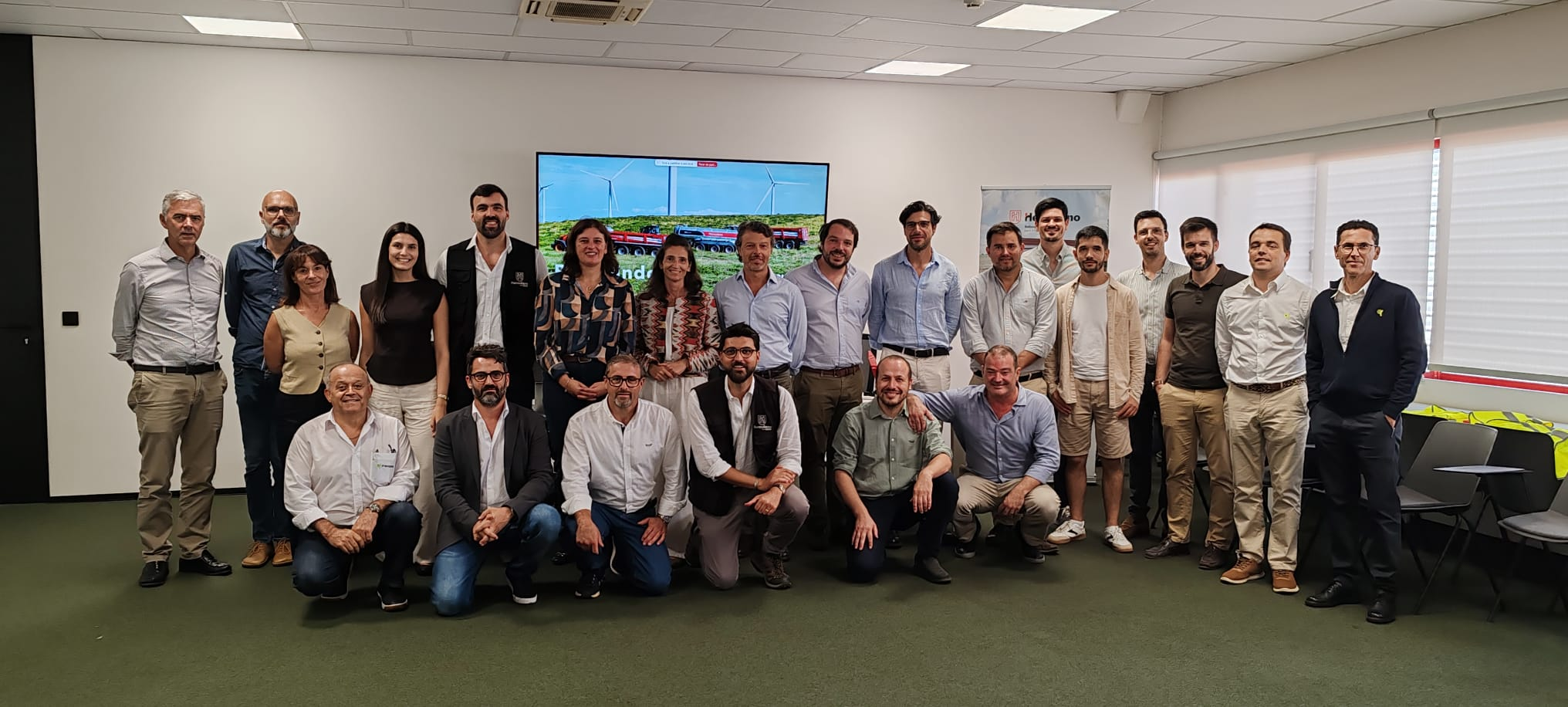
Do Porto a Viana, com paragem na Aguçadoura: é este o roteiro para o futuro das energias renováveis. Durante dois dias, o consórcio do EnerTEF, do qual o INESC TEC faz parte, teve a oportunidade de discutir os resultados alcançados no âmbito do projeto e conhecer uma das Testing and Experimentation Facilities (TEF), baseada em Portugal, onde será possível testar, validar e certificar soluções de Inteligência Artificial aplicada ao setor energético.  

07 novembro 2025

Sistemas de Energia

INESC TEC viaja até UT Austin para partilhar conhecimento em hidrogénio verde

Um mundo movido a hidrogénio? O caminho faz-se de muitos desafios, mas há também muitas oportunidades a explorar que podem começar na colaboração entre a Europa e os Estados Unidos da América. O INESC TEC participou no Hydrogen Day 2025, na Universidade do Texas em Austin (UT Austin), um evento que reuniu indústria, academia e especialistas internacionais na construção de um futuro energético mais sustentável.

21 outubro 2025

Sistemas de Energia

Investigadora do INESC TEC nomeada membro do Consello da Culura Galega

De que forma podemos aproximar a ciência da cultura? A reposta pode agora chegar mais rapidamente com a nomeação da investigadora do INESC TEC Susana Bayo como membro do Consello da Cultura Galega, organismo consultivo da Comunidade Autónoma da Galiza responsável por promover o conhecimento e aconselhar o Governo regional em matérias culturais.

07 outubro 2025

Sistemas de Energia

Como gerir melhor uma comunidade de energia com 10 ferramentas

Gerir uma comunidade de energia pode tornar-se até ainda mais eficiente graças a um conjunto de ferramentas digitais que o INESC TEC está a preparar no âmbito do projeto europeu EMPEDOFLEX. São pelo menos 10 as aplicações interoperáveis, que serão validadas em quatro , e que irão apoiar municípios, operadores de rede e gestores de comunidades energéticas a reduzir custos, integrar mais fontes de energia renovável e aumentar a resiliência das redes.

29 setembro 2025

Sistemas de Energia

Pode a ciência feita em Portugal influenciar o futuro energético da União Europeia?

Recentemente, investigadores do INESC TEC colaboraram com o laboratório de interoperabilidade em redes inteligentes do Joint Research Centre (JRC) – o serviço científico da Comissão Europeia que apoia a criação de políticas públicas – para formar os seus técnicos em interoperabilidade semântica, uma tecnologia-chave para a digitalização do setor energético europeu.

29 setembro 2025

002
021

Projetos Selecionados

PredicoSupportV2

Collaborative Forecasting Platform for ELIA – New UI functionalities

2025-2026

SOLAR_MOVE

SOLAR Photovoltaic to MOVE for Systems Integration

2025-2029

PVSmile

Digitalizing the Lifecycle of Community-Integrated PV Systems for Smart Grid-Ready and Inclusive Energy Communities

2025-2028

BLACK_START_EAU

Study for Black Start Units and preparation of Blackout Restoration Plan

2025-2026

FPotBond

Estudo de compensação de fator de potência para a fábrica de Estarreja da Bondalti

2025-2026

RIFF

Research Infrastructures for the Future of Ukraine: Roadmap for Sustained Growth and Recovery

2025-2028

GridNode_Bridge

Design, development and testing of Dynamic System Rating under BRIDGE Project

2025-2026

FCR_HIDRICA

Acompanhamento técnico para a prestação de serviço de reserva de Contenção de frequência de uma Central Hídrica

2025-2025

TariffRAM

Definição de tarifas a aplicar aos parques eólicos da RAM

2025-2026

BlackoutAddendum

Understanding the Iberian Blackout Exploiting Data from Electric Companies Associated to AELEC - Addendum

2025-2025

Perfis_Perdas_2026

Determinação de Perfis de Perdas e de Fatores de Ajustamento para Perdas para 2026

2025-2025

Hibrid_Douro

Avaliação do cumprimento do código de rede do projeto de hibridização do parque eólico do Alto Douro

2025-2026

Hibrid_Raia

Avaliação do cumprimento do código de rede do projeto de hibridização do parque eólico de Raia

2025-2026

CampusREN2025

Formação Avançada para a REN CAMPUS REN2025

2025-2025

BolsasFCT_Gestao

Financiamento Bolsas Doutoramento FCT - Gestão

2025-9999

REATIVA_MINHO

Estudo de otimização de potência reativa do Parque Eólico do Alto Minho I

2024-2025

EnerTEF

Common European-scale Energy Artificial Intelligence Federated Testing and Experimentation Facility

2024-2027

Data4LEM

Synthetic and Explainable Data Generation for the Simulation and Analysis of Future Local Electricity Markets

2024-2025

MORADIST

PS-MORA Arquitetura distribuída

2021-2025

Meteo_NMP_Forecast

2015-2016

SiMicrogrids

2015-2015

Equipa
001

Laboratórios

Laboratório de Redes Elétricas Inteligentes e Veículos Elétricos

Publicações

CPES Publicações

Ler todas as publicações

2026

Industrial Application of High-Temperature Heat and Electricity Storage for Process Efficiency and Power-to-Heat-to-Power Grid Integration

Autores
Coelho A.; Silva R.; Soares F.J.; Gouveia C.; Mendes A.; Silva J.V.; Freitas J.P.;

Publicação
Lecture Notes in Energy

Abstract
This chapter explores the potential of thermal energy storage (TES) systems towards the decarbonization of industry and energy networks, considering its coordinated management with electrochemical energy storage and renewable energy sources (RES). It covers various TES technologies, including sensible heat storage (SHS), latent heat storage (LHS), and thermochemical energy storage (TCS), each offering unique benefits and facing specific challenges. The integration of TES into industrial parks is highlighted, showing how these systems can optimize energy manage-ment and reduce reliance on external sources. A district heating use case also demonstrates the economic and environmental advantages of a multi-energy management strategy over single-energy approaches. Overall, TES technologies are presented as a promising pathway to greater energy effi-ciency and sustainability in industrial processes.

2025

Fuzzy Logic Estimation of Coincidence Factors for EV Fleet Charging Infrastructure Planning in Residential Buildings

Autores
Carvalhosa, S; Ferreira, JR; Araújo, RE;

Publicação
ENERGIES

Abstract
As electric vehicle (EV) adoption accelerates, residential buildings-particularly multi-dwelling structures-face increasing challenges to electrical infrastructure, notably due to conservative sizing practices of electrical feeders based on maximum simultaneous demand. Current sizing methods assume all EVs charge simultaneously at maximum capacity, resulting in unnecessarily oversized and costly electrical installations. This study proposes an optimized methodology to estimate accurate coincidence factors, leveraging simulations of EV user charging behaviors in multi-dwelling residential environments. Charging scenarios considering different fleet sizes (1 to 70 EVs) were simulated under two distinct premises of charging: minimization of current allocation to achieve the desired battery state-of-charge and maximization of instantaneous power delivery. Results demonstrate significant deviations from conventional assumptions, with estimated coincidence factors decreasing non-linearly as fleet size increases. Specifically, applying the derived coincidence factors can reduce feeder section requirements by up to 86%, substantially lowering material costs. A fuzzy logic inference model is further developed to refine these estimates based on fleet characteristics and optimization preferences, providing a practical tool for infrastructure planners. The results were compared against other studies and real-life data. Finally, the proposed methodology thus contributes to more efficient, cost-effective design strategies for EV charging infrastructures in residential buildings.

2025

Location of grid forming converters when dealing with multi-class stability problems

Autores
Fernandes, F; Lopes, JP; Moreira, C;

Publicação
IET GENERATION TRANSMISSION & DISTRIBUTION

Abstract
This work proposes an innovative methodology for the optimal placement of grid-forming converters (GFM) in converter-dominated grids while accounting for multiple stability classes. A heuristic-based methodology is proposed to solve an optimisation problem whose objective function encompasses up to 4 stability indices obtained through the simulation of a shortlist of disturbances. The proposed methodology was employed in a modified version of the 39-bus test system, using DigSILENT Power Factory as the simulation engine. First, the GFM placement problem is solved individually for the different stability classes to highlight the underlying physical phenomena that explain the optimality of the solutions and evidence the need for a multi-class approach. Second, a multi-class approach that combines the different stability indices through linear scalarisation (weights), using the normalised distance of each index to its limit as a way to define its importance, is adopted. For all the proposed fitness function formulations, the method successfully converged to a balanced solution among the various stability classes, thereby enhancing overall system stability.

2025

Frequency support from PEM hydrogen electrolysers using Power-Hardware-in-the-Loop validation

Autores
Elhawash, AM; Araújo, RE; Lopes, JAP;

Publicação
INTERNATIONAL JOURNAL OF HYDROGEN ENERGY

Abstract
Maintaining frequency stability is one of the biggest challenges facing future power systems, due to the increasing penetration levels of inverter-based renewable resources. This investigation experimentally validates the frequency provision capabilities of a real Polymer Electrolyte Membrane (PEM) hydrogen electrolyser (HE) using a power hardware-in-the-loop (PHIL) setup. The PHIL consists of a custom 3-level interleaved buck converter and a hardware platform for real-time control of the converter and conducting grid simulation, associated with the modelling of the future Iberian Peninsula (IP) and Continental Europe (CE) systems. The investigation had the aim of validating earlier simulation work and testing new responses from the electrolyser when providing different frequency services at different provision volumes. The experimental results corroborate earlier simulation results and capture extra electrolyser dynamics as the double-layer capacitance effect, which was absent in the simulations. Frequency Containment Reserve (FCR) and Fast Frequency Response (FFR) were provided successfully from the HE at different provision percentages, enhancing the nadir and the rate of change of frequency (RoCoF) in the power system when facing a large disturbance compared to conventional support only. The results verify that HE can surely contribute to frequency services, paving the way for future grid support studies beyond simulations.

2025

Evolving Symbolic Model for Dynamic Security Assessment in Power Systems

Autores
Fernandes, FS; Bessa, RJ; Lopes, JP;

Publicação
JOURNAL OF MODERN POWER SYSTEMS AND CLEAN ENERGY

Abstract
In a high-risk sector, such as power system, transparency and interpretability are key principles for effectively deploying artificial intelligence (AI) in control rooms. Therefore, this paper proposes a novel methodology, the evolving symbolic model (ESM), which is dedicated to generating highly interpretable data-driven models for dynamic security assessment (DSA), namely in system security classification (SC) and the definition of preventive control actions. The ESM uses simulated annealing for a data-driven evolution of a symbolic model template, enabling different cooperative learning schemes between humans and AI. The Madeira Island power system is used to validate the application of the ESM for DSA. The results show that the ESM has a classification accuracy comparable to pruned decision trees (DTs) while boasting higher global inter-pretability. Moreover, the ESM outperforms an operator-defined expert system and an artificial neural network in defining preventive control actions.

Factos & Números

9Docentes do Ensino Superior

2020

24Investigadores Séniores

2016

78Investigadores

2016

Contactos