Cookies Policy
The website need some cookies and similar means to function. If you permit us, we will use those means to collect data on your visits for aggregated statistics to improve our service. Find out More
Accept Reject
  • Menu
Facts & Numbers
000
Presentation

Enterprise Systems Engineering

At CESE, we use the knowledge generated in research to provide high value-added niche services to industrial enterprises in areas such as Manufacturing Systems Design, Manufacturing Systems Planning and Management, Collaborative Platforms, Supply Chain Strategy, Manufacturing Intelligence or Construction Information Management.

Our mission is to advance the scientific knowledge in enterprise systems engineering, fostering high impact management and ICT systems, and generating innovative services for industrial organisations.

We want to be recognised as a leading research centre in enterprise systems engineering and as a first choice in helping industrial organisations to achieve sustainable, high-performance levels.

Latest News

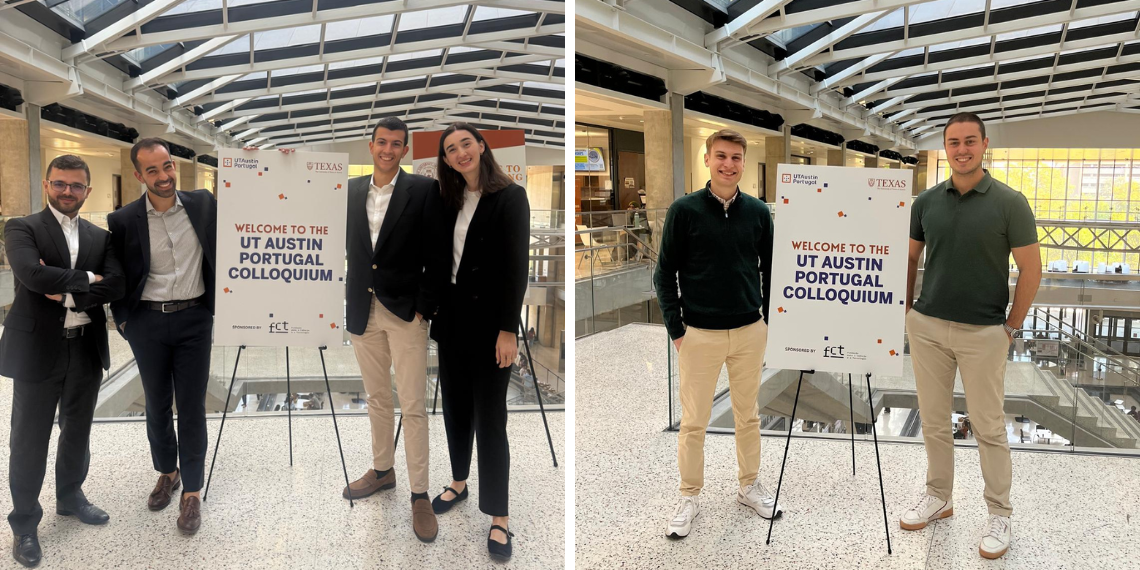
From science to market: INESC TEC researchers headed to UT Austin for entrepreneurship programme

One team works in Robotics and the other in Systems Engineering and Management; and they share the ambition to take their R&D work to the market. This goal led them to participate in TechLaunch, an entrepreneurship bootcamp promoted by the UT Austin Portugal Program. Both INESC TEC research teams were selected for the initiative and had the opportunity to spend a week at UT Austin.

12th January 2026

Systems Engineering and Management

INESC TEC aims to make wastewater treatment plants more sustainable and better integrated into local territories

Making wastewater treatment plants even more sustainable and efficient? It’s possible. Within the scope of the WOOSU project, INESC TEC is developing an advanced technological solution dedicated to optimising the operation of these infrastructures. The future lies in unlocking new circularity opportunities involving different elements of the system - water, energy, and materials.

12th December 2025

Systems Engineering and Management

Researchers “rethink” last-mile logistics to boost the sustainability of e-commerce

Over the next three years, a decision-support system will be developed to identify the most suitable strategies for parcel delivery in a sustainable and efficient way, considering the urban features of the locations where deliveries must occur. The LOG-in project aims to improve the response to the logistical challenges of last-mile deliveries – a costly, complex stage of urban logistics with a significant environmental impact.  

27th November 2025

Systems Engineering and Management

Sustainability, soils and ecosystems: the DFENCE project delivers innovative solutions for grazing through precision livestock farming

INESC TEC participated in the kick-off meeting of the DFENCE project - which aims to develop a system integrating prediction, planning, soil analysis and autonomous animal guidance. The main objectives of the event were to define the technical orientation between consortium members and plan the first activities.

26th November 2025

Systems Engineering and Management

Mobilising Agendas take centre stage at international conference in Japan thanks to INESC TEC

Drivolution, Bioeconomy BE@T, and Produtech_R3: these were the three Mobilising Agendas from Portugal’s Recovery and Resilience Plan (PRR) that INESC TEC presented at the APMS 2025 International Conference on Advances in Production Management Systems, held in Kamakura (Japan).

12th November 2025

001
004

Featured Projects

DIGIVERDE50

2026-2028

PFA_DIG_SHOPFLOOR_2a

Programa de Formação Avançada - Digitalização Shopfloor - 2.ª edição

2025-2025

S2GAIIA

Specialized and Sustainable Generative AI for Industry Applications

2025-2028

TRF4p0

Digital revolution of power transformers

2020-2023

Team
001

Laboratories

Laboratory of Industrial Robotics and Automation

Publications

CESE Publications

View all Publications

2026

Hybrid Human-AI Collaborative Networks

Authors
Camarinha-Matos, LM; Ortiz, A; Boucher, X; Lucas Soares, A;

Publication
IFIP Advances in Information and Communication Technology

Abstract

2026

Data Spaces as Enablers of Digital Twin Ecosystems: Challenges and Requirements

Authors
Chaves, AC; Alonso, AN; Soares, AL;

Publication
ADVANCES IN PRODUCTION MANAGEMENT SYSTEMS. CYBER-PHYSICAL-HUMAN PRODUCTION SYSTEMS: HUMAN-AI COLLABORATION AND BEYOND, APMS 2025, PT V

Abstract
The increasing adoption of the Digital Twin concept and technology for managing complex physical assets has led to the emergence of Digital Twin Ecosystems, where interconnected digital twins generate additional value. However, ensuring seamless data sharing and interoperability among diverse systems presents significant challenges. Although research on digital twin architectures has advanced, gaps remain in addressing data governance, security, and stakeholders' trust. This study performs a comprehensive literature review to investigate architectural solutions to overcome challenges in digital twin ecosystems. The findings identify key requirements such as interoperability, governance, and data management, emphasizing the role of Data Spaces as enablers of secure data sharing. By structuring the requirements for digital twin ecosystem architectures, this paper identifies gaps suggesting future research on scalable and sustainable digital twin ecosystem implementations. These insights are expected to contribute to the development of frameworks that integrate technical advances with organizational and regulatory considerations, ultimately fostering the adoption of digital twin ecosystems across industries.

2026

Human-Centered Augmented Reality in Manufacturing: Enhancing Efficiency, Accuracy, and Operator Adoption

Authors
Ramalho, FR; Soares, AL; Simoes, AC; Almeida, AH; Oliveira, M;

Publication
ADVANCES IN PRODUCTION MANAGEMENT SYSTEMS. CYBER-PHYSICAL-HUMAN PRODUCTION SYSTEMS: HUMAN-AI COLLABORATION AND BEYOND, APMS 2025, PT I

Abstract
This paper evaluates an Augmented Reality (AR) solution designed to support quality control in a assembly line inspection station before body marriage at a European automotive manufacturer. A threephase methodology was applied: an AS-IS assessment, a formative evaluation of an intermediate prototype, and a summative evaluation under real production conditions. The AR solution aimed to improve task standardization, non-value-added time (NVAT), and enhance operator accuracy. The results showed that operators successfully developed inspections using the AR tool, identifying and correcting non-conformities (NOKs) while maintaining task duration. Participants valued having contextual information directly in their field of vision and reported increased rigor and consistency. However, usability and ergonomic improvements were noted, such as headset weight, gesture interaction, and visibility over dark components. The findings highlight AR's potential to support operator autonomy and accuracy in industrial environments while emphasizing the need for human-centered design and integration to ensure long-term adoption.

2026

Robotic Process Automation: A Qualitative Journey Through RPA's Impacts on Company Employees

Authors
Simoes, E; Simoes, AC; Rodrigues, JC; Lourenço, P;

Publication
ADVANCES IN PRODUCTION MANAGEMENT SYSTEMS. CYBER-PHYSICAL-HUMAN PRODUCTION SYSTEMS: HUMAN-AI COLLABORATION AND BEYOND, APMS 2025, PT I

Abstract
Companies are increasingly adopting technologies such as Robotic Process Automation (RPA) to reduce costs and improve productivity. RPA is deployed in areas like accounting, payroll, and finance to automate business processes. While RPA does not necessarily result in unemployment, it has notable effects on employees and company governance. This study explores the impact of RPA implementation on employees and company governance, using a qualitative methodology based on thirteen semi-structured interviews with RPA experts from four multinational companies. The results indicate that the impacts of RPA vary depending on the automation strategy adopted (task-oriented or process-oriented). In task-oriented strategies, citizen developers often play a central role, contributing to rapid implementation. In contrast, process-oriented strategies tend to rely on professional developers and require more structured governance. The findings also point out that RPA influences not only task execution but also employee upskilling, job role redefinition, and the evolution of governance models. The study proposes an integrated framework linking automation strategy, governance, upskilling, and employee adaptation, offering both practical insights and theoretical contributions to digital transformation research and for managing risks and enhancing workforce capabilities. It also advances academic understanding by linking real-world RPA implementations to organisational and technological impacts.



2026

Predictors for decision-making in collaborative robots adoption: evidence from the Brazilian manufacturing industry

Authors
de Sousa, PR; Bronzo, M; Torres, NT Jr; Vivaldini, M; Simoes, AC; de Jesus, TS; Couto, G;

Publication
OPERATIONS MANAGEMENT RESEARCH

Abstract
As collaborative robots increasingly redefine industrial automation, understanding the factors that drive their adoption is essential to operations management. This study examines the main drivers of collaborative robot adoption in the Brazilian manufacturing sector by combining theory-driven framing with a machine learning classification approach. It was developed a Random Forest classifier to identify the strongest predictors of cobot adoption and to rank their relative importance. Data were collected from a sample of respondents-primarily managers and chief executive officers-representing 300 industrial companies. Grounded in the Technology-Organization-Environment (TOE) framework and complemented by Diffusion of Innovations (DoI) and Institutional (INT) perspectives, the analysis shows that technological advantages, namely space efficiency, cost reduction, and ease of integration, are critical drivers of adoption. Organizational factors, including proactive managerial involvement and alignment with an innovation-oriented culture, significantly increase the likelihood of collaborative robot uptake. The model demonstrated robust predictive performance and produced interpretable variable importance scores that confirm the relative influence of technological and managerial factors. These findings provide a structured lens for understanding and guiding managerial decision-making on cobot adoption and translate into practical recommendations for managers.

Facts & Figures

11Papers in indexed journals

2020

60Researchers

2016

8Proceedings in indexed conferences

2020