Cookies
O website necessita de alguns cookies e outros recursos semelhantes para funcionar. Caso o permita, o INESC TEC irá utilizar cookies para recolher dados sobre as suas visitas, contribuindo, assim, para estatísticas agregadas que permitem melhorar o nosso serviço. Ver mais
Aceitar Rejeitar
  • Menu
Apresentação

Robótica Industrial e Sistemas Inteligentes

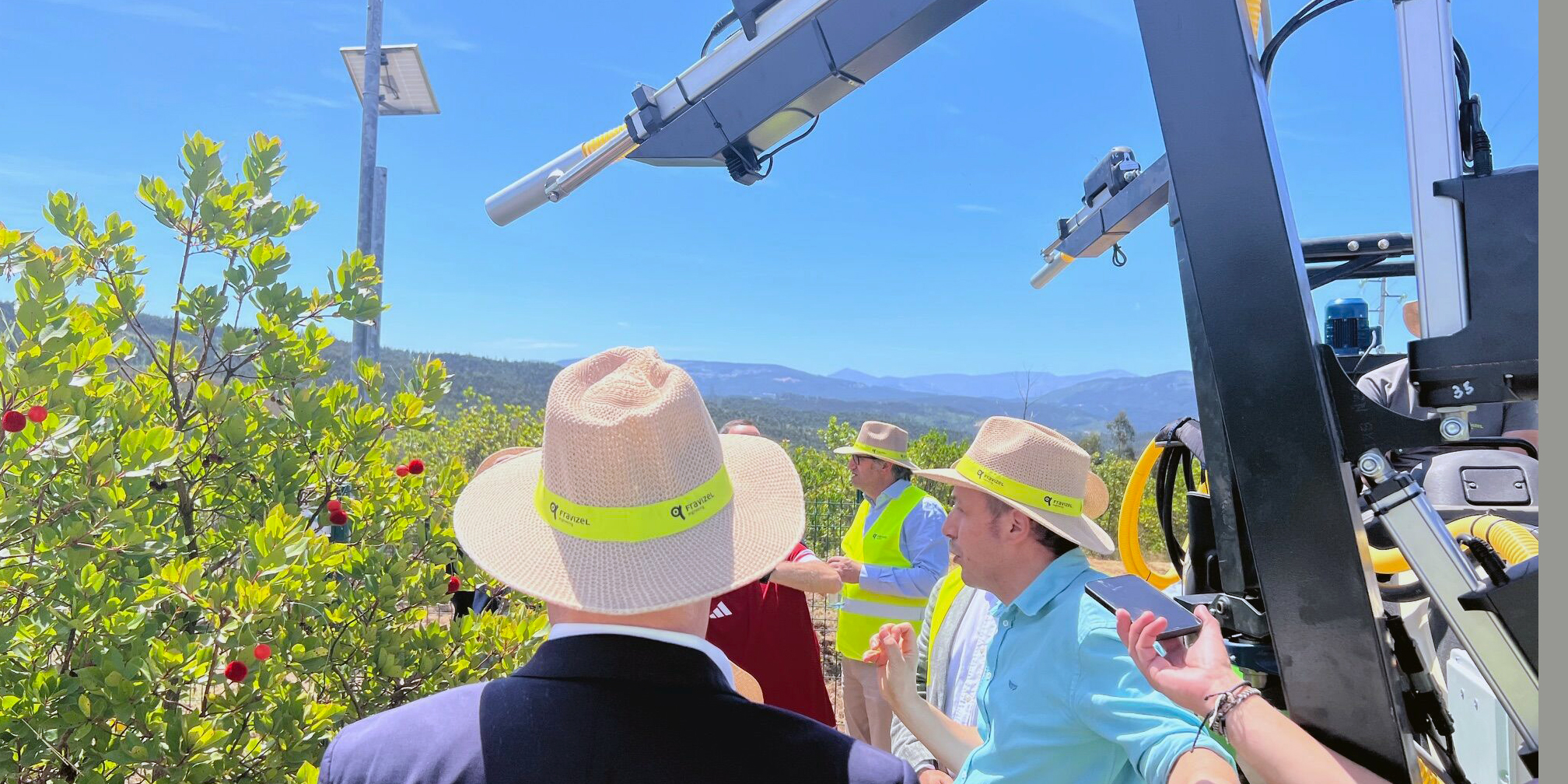
É no Centro de Robótica Industrial e Sistemas Inteligentes que florescem soluções inovadoras para alavancar a robótica no contexto industrial, agrícola e florestal e impulsionar a transformação digital da indústria.


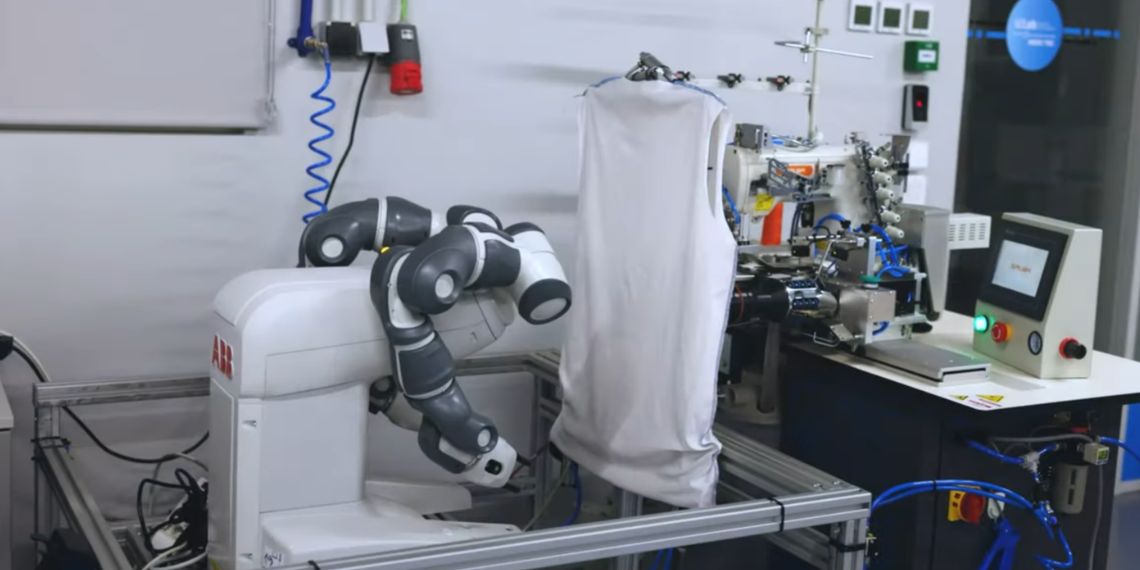
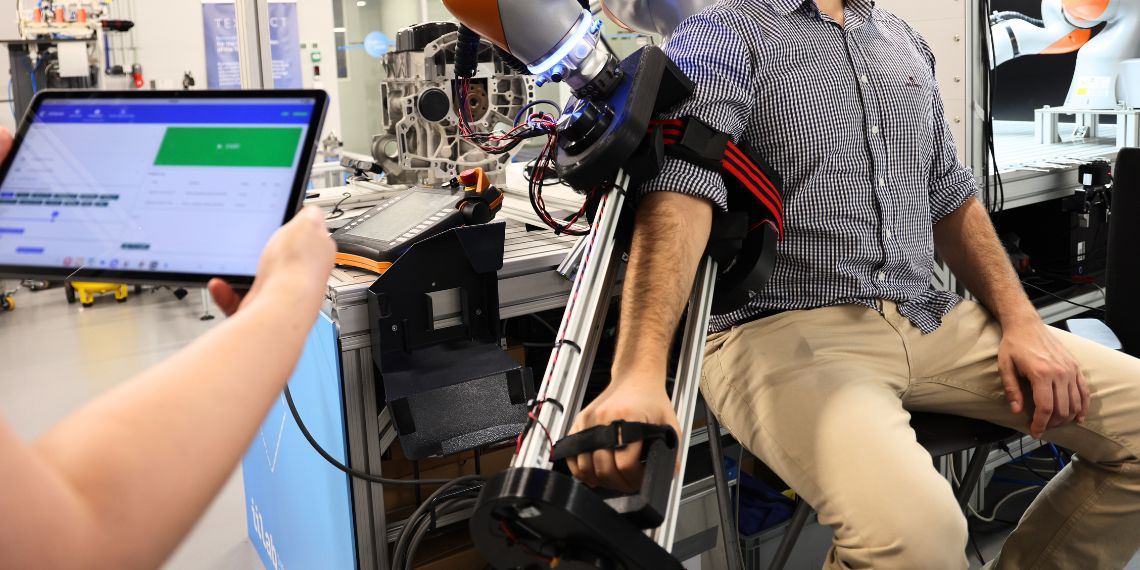
Seguimos uma abordagem prática – da conceção à implantação – para ensaiar a navegação e localização de robôs móveis, testar avanços na visão industrial 2D/3D e deteção avançada, sem descurar a robótica industrial e colaborativa, e interfaces humano-robô.


O nosso TRIBE LAB é terreno fértil para ideias inovadoras sobre a agricultura do futuro. Ali desenvolvemos protótipos e tecnologia de excelência em robótica agrícola e IoT: com protótipos, sensores avançados (LiDAR, câmaras AI) e ferramentas de prototipagem rápida, aceleramos o desenvolvimento de soluções para o setor agroflorestal. Marcamos ainda presença no iiLab, onde unimos investigação aplicada, demonstração tecnológica e testes em ambiente controlado, promovendo a integração de tecnologias emergentes na indústria. Desde células robóticas inteligentes e sistemas ciberfísicos até à análise de dados e IA, é um espaço de inovação onde as empresas podem experimentar e validar soluções para a fábrica do futuro.


Com uma equipa multidisciplinar e alinhado com agendas europeias, o nosso trabalho de investigação combina ciência fundamental e aplicação com impacto no desenho de soluções para a indústria 4.0, promovendo a competitividade e a transformação digital do setor.
Tópicos
de interesse
Equipa
  • a
  • b
  • c
  • d
  • e
  • f
  • g
  • h
  • i
  • j
  • k
  • l
  • m
  • n
  • o
  • p
  • q
  • r
  • s
  • t
  • u
  • v
  • w
  • x
  • y
  • z
Publicações

CRIIS Publicações

Ler todas as publicações

2026

A review of visual perception for robotic bin-picking

Autores
Cordeiro, A; Rocha, LF; Boaventura-Cunha, J; Figueiredo, D; Souza, JP;

Publicação
ROBOTICS AND AUTONOMOUS SYSTEMS

Abstract
Robotic bin-picking is a critical operation in modern industry, which is characterised by the detection, selection, and placement of items from a disordered and cluttered environment, which can be boundary limited or not, e.g. bins, boxes or containers. In this context, perception systems are employed to localise, detect and estimate grasping points. Despite the considerable progress made, from analytical approaches to recent deep learning methods, challenges still remain. This is evidenced by the growing innovation proposing distinct solutions. This paper aims to review perception methodologies developed since 2009, providing detailed descriptions and discussions of their implementation. Additionally, it presents an extensive study, detailing each work, along with a comprehensive overview of the advancements in bin-picking perception.

2026

Economic benchmarking of assisted pollination methods for kiwifruit flowers: Assessment of cost-effectiveness of robotic solution

Autores
Pinheiro, I; Moura, P; Rodrigues, L; Pacheco, AP; Teixeira, JG; Valente, LG; Cunha, M; Neves Dos Santos, FN;

Publicação
Agricultural Systems

Abstract
In 2023, global kiwifruit production reached over 4.4 million tonnes, highlighting the crop's significant economic importance. However, achieving high yields depends on adequate pollination. In Actinidia species, pollen is transferred by insects from male to female flowers on separate plants. Natural pollination faces increasing challenges due to the decline in pollinator populations and climate variability, driving the adoption of assisted pollination methods. This study examines the Portuguese kiwifruit sector, one of the world's top 12 producers, using a novel mixed-methods approach that integrates both qualitative and quantitative analyses to assess the feasibility of robotic pollination. The qualitative study identifies the benefits and challenges of current methods and explores how robotic pollination could address these challenges. The quantitative analysis explores the cost-effectiveness and practicality of implementing robotic pollination as a product and service. Findings indicate that most farmers use handheld pollination devices but face pollen wastage and application timing challenges. Economic analysis establishes a break-even point of €685 per hectare for an annual single application, with a first robotic pollination of €17 146 becoming cost-effective for orchards of at least 3.5 hectares and a second robotic solution of €34 293 becoming cost-effective for orchards up to 7 hectares. A robotic pollination service priced at €685 per hectare per application presents a low-risk and a viable alternative for growers. This study provides robust economic insights supporting the adoption of robotic pollination technologies. This study is crucial to make informed decisions to enhance kiwifruit production's productivity and sustainability through precise robotic-assisted pollination. © 2025 Elsevier B.V., All rights reserved.

2026

Active learning for industrial defect detection: a study on hybrid sampling strategies

Autores
Garcia Gonzalez, D; Nascimento, R; D. Rocha, C; F. Silva, M; Filipe, V; F. Rocha, L; Gonzaga Magalhães, L; Cunha, A;

Publicação
The International Journal of Advanced Manufacturing Technology

Abstract

2026

AI Enabled Robotic Loco-Manipulation

Autores
Li, Q; Xie, M; Tokhi, MO; Silva, MF;

Publicação
Lecture Notes in Networks and Systems

Abstract

2026

Crisis or Redemption with AI and Robotics? The Dawn of a New Era

Autores
Silva, MF; Tokhi, MO; Ferreira, MIA; Malheiro, B; Guedes, P; Ferreira, P; Costa, MT;

Publicação
Lecture Notes in Networks and Systems

Abstract