
Cookies Policy
The website need some cookies and similar means to function. If you permit us, we will use those means to collect data on your visits for aggregated statistics to improve our service. Find out More
Accept Reject
  • Menu
Presentation

Innovation, Technology and Entrepreneurship

The mission of our Centre for Innovation, Technology and Entrepreneurship (CITE) is to carry out multidisciplinary activities at the intersection of technology, innovation, sustainability, and management, promoting the exploration, implementation, and adoption of responsible and sustainable socio-technical systems.


We focus on the areas of Innovation Management, Technology Management, and Technology-Based Entrepreneurship, exploring theories, methods, models, and tools to support the innovation process. Through research and innovation activities—including consultancy and advanced training—we address environmental, social, and economic challenges, contributing to the exploration, implementation, and adoption of innovative solutions. We create impact through research and innovation outcomes, aligning our activities with the Sustainable Development Goals (SDGs).


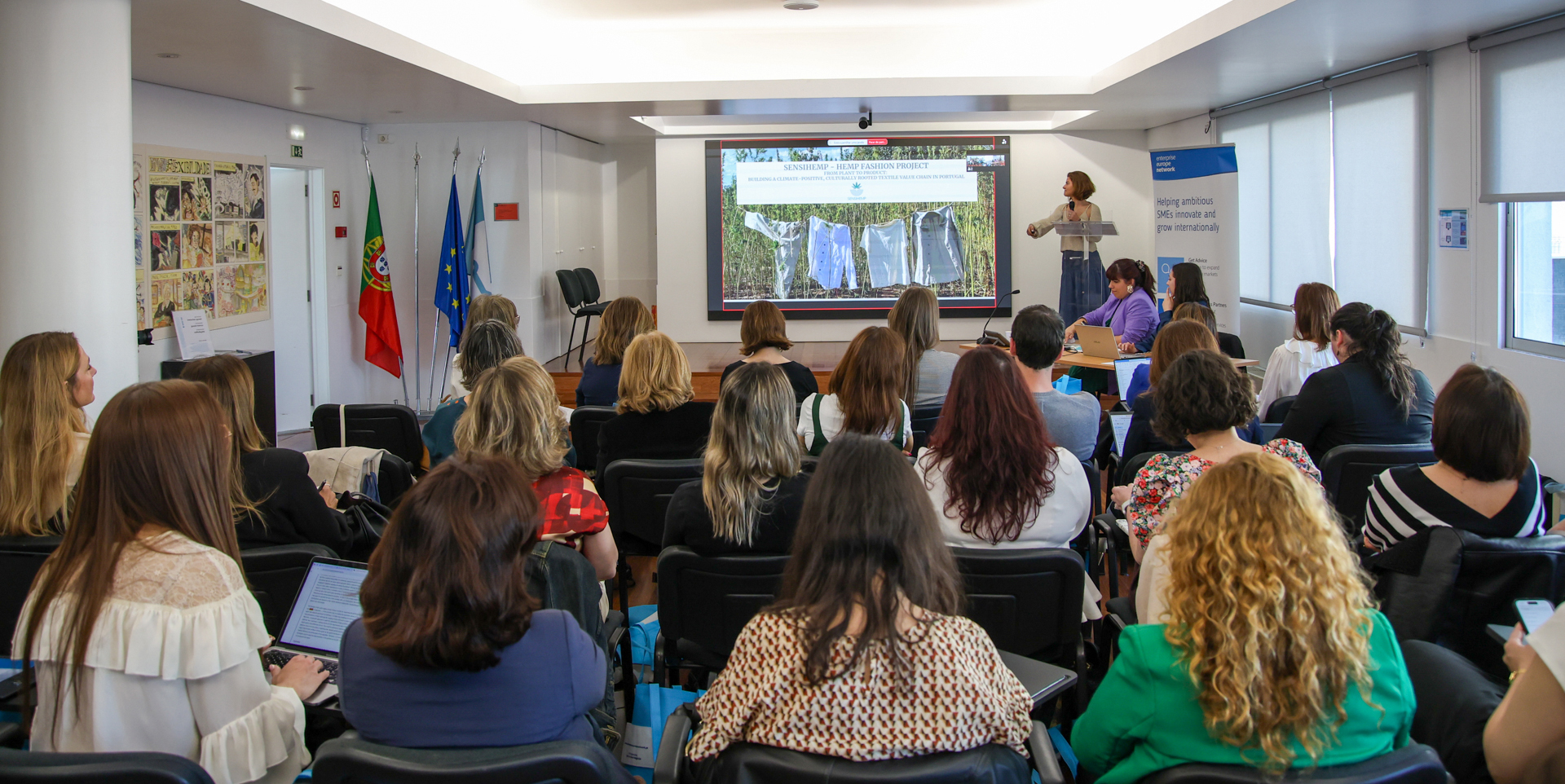
We place high value on collaboration with both national and international partners. We are a member of the Enterprise Europe Network (EEN), where our mission is to support Portuguese companies on their innovation journey by identifying and fostering international partnerships for business or innovation development, while also helping to find the most relevant funding sources.


We support the implementation of innovation management systems, integrating technology management with new business models and value chains, and promoting sustainable and responsible practices. We also run open innovation and acceleration programmes, contributing to the development of startups and the strengthening of innovation ecosystems.


We work across three core areas: innovation management and the front end of innovation (FEI), technology management and policy, and entrepreneurship and business model innovation.
Interest
Topics
Team
Publications

CITE Publications

View all Publications

2026

Impact of Green Knowledge Sharing on the Organizational Performance of SMEs : The Mediating Role of Green Organizational Culture and Technological Innovation

Authors
Almeida, F; Okon, E;

Publication
Knowledge and Process Management

Abstract
ABSTRACT This study explores the impact of Green Knowledge Sharing (GKS) on Organizational Performance (OP), considering the mediating roles of Green Organizational Culture (GOC) and Technological Innovation (TI). Addressing current gaps in the literature, the research extends beyond sector-specific analyses and incorporates a cross-country perspective, examining 297 small and medium-sized enterprises (SMEs) in Portugal, Spain, and the United Kingdom. Additionally, this study acknowledges the influence of digital transformation in enhancing GKS, a factor often overlooked in previous research. By adopting a Structural Equation Modeling (SEM) approach, this article confirms a direct and positive effect on both OP and GOC, with GOC further influencing OP, establishing its mediating role in this relationship. However, the relationships between GKS and TI, as well as the indirect effect of GKS on OP through TI, are not supported. These findings offer theoretical advancements by broadening the conventional understanding of OP beyond financial metrics and present practical implications for SME managers, highlighting strategies to foster a green organizational culture and leverage technological innovation for sustainable performance.

2026

Entrepreneurial Performance of New Ventures in the Sustainable Open Innovation Paradigm

Authors
Almeida, F;

Publication
Administrative Sciences

Abstract
The entrepreneurial performance of new ventures operating within the sustainable open innovation paradigm remains underexplored, particularly in terms of how specific sustainability-oriented practices translate into measurable performance outcomes. Prior research has largely examined sustainability, entrepreneurship, and open innovation in isolation, offering limited empirical evidence on their combined effects at the early venture stage. To address this gap, this study analyzes panel data from 407 new ventures incubated in science and technology parks, employing regression-based panel data analysis to examine the relationships between sustainable practices, open innovation engagement, and entrepreneurial performance. The findings suggest that new ventures widely adopt sustainable materials and energy as key strategies, which significantly influence entrepreneurial performance. In contrast, support from local communities does not have a statistically significant impact. Among the sociodemographic factors tested, only the number of years participating in open innovation networks shows a significant effect on entrepreneurial performance. Theoretically, this study advances sustainable open innovation literature by empirically integrating sustainability practices into entrepreneurship performance models. From a managerial perspective, the findings offer actionable insights for entrepreneurs and incubator managers, highlighting which sustainability strategies and network engagements are most likely to yield performance benefits in new ventures.

2026

The Contribution of Students to Sustainable Development: French Experience

Authors
Garcia, A; Martinez, M; Marco, TS; Almeida, FL;

Publication
Business Sustainability: Innovation in Entrepreneurship & Internationalisation

Abstract

2026

Sustainable Social Entrepreneurship and Digital Technologies: A Systematic Literature Review and Research Agenda

Authors
Khan, SN; Iqbal, A; Almeida, FL;

Publication
Business Sustainability: Innovation in Entrepreneurship & Internationalisation

Abstract

2026

Scientific and industrial specialisation, structural change and economic growth: Global evidence

Authors
Teixeira, AAC; Pinto, A;

Publication
RESEARCH POLICY

Abstract
Understanding how structural change drives long-run growth requires jointly considering the dynamics of productive and scientific specialisations, and science-industry alignment. This paper develops and tests a unified framework that integrates evolutionary, structuralist, complexity, and innovation-systems perspectives to assess how productive and scientific specialisations, science-industry alignment, diversification, and global value chain integration shape economic performance. To operationalize this framework, we construct new indicators, including a Science-Industry Matching (SIM) index, measures of dynamic entry and relatedness density, and specialisation-based diversity indices, and apply them to a panel of up to 142 countries over 2000-2018/2023. Estimation relies on country fixed effects with Driscoll-Kraay standard errors to address heteroskedasticity, autocorrelation, and cross-sectional dependence. The results reveal that persistent specialisation in high- and medium-high-tech industries fosters growth, while low-tech dependence constrains it. Scientific specialisation in enabling fields such as mathematics, physics, chemistry, and energy/environmental sciences supports growth, but excessive concentration risks lock-in. Science-industry alignment enhances growth in advanced economies with strong absorptive capacity but penalises weaker systems. Industrial diversification often dilutes resources, whereas scientific diversification consistently promotes growth by broadening the knowledge base for recombination. Finally, integration into global value chains is growth-enhancing in developing economies, while advanced economies can sustain higher domestic value added without significant penalties.