

INESC TEC joins €18M project to decarbonise the ceramics industry
Producing ceramic tiles requires energy-intensive processes: from kilns and dryers to other industrial methods, reducing emissions without compromising product quality is both a technological and an economic challenge. The INTELLICER project aims to tackle it by using Artificial Intelligence (AI) to determine how, when and from which sources energy should be used, accelerating the decarbonisation of Portugal’s ceramics industry.
22nd October 2026
Energy accounts for a significant share of production costs for companies in the ceramics and glass sectors. Against a backdrop of growing pressure to cut emissions and improve competitiveness, finding more efficient ways to manufacture products has become a priority. INTELLICER brings together 10 Portuguese organisations, including companies and research institutions, to create an intelligent energy and resource management ecosystem specifically designed to produce single-fired ceramic wall tiles. The goals are to cut carbon dioxide emissions by up to 50% and energy costs by up to 20%, while aiming to achieve up to 90% renewable energy in self-consumption. To do so, the project will develop a range of technologies: from energy storage and renewable energy solutions to the electrification of industrial processes, heat recovery and the use of raw materials with a lower carbon footprint.
INESC TEC will develop an intelligent system to integrate and optimise different energy resources using AI, forecasting models and optimisation algorithms, explained researcher Filipe Joel Soares.
“The Institute is responsible for the project’s intelligent energy management system, namely the architecture to the algorithms. We use AI models to forecast solar power generation, factory energy consumption and electricity prices. Based on these forecasts, optimisation algorithms determine the operating plan and energy mix for the following day, then adjust them in real time, hour by hour,” he explained.
In practice, the researcher said, “the factory will automatically decide which energy source to use at any given moment: the grid, solar generation, batteries or gas. It will also decide when to store energy and how to schedule the operation of the most energy-intensive equipment. The goal is to consume more energy when renewable sources are available or electricity is cheaper, without affecting production.”
“All the project’s solutions, including our system, will be implemented and validated in a real industrial environment at the Primus Ceramics factory in Aveiro,” Filipe Joel Soares added.
The challenge is not simply to consume less energy, but to use it more efficiently. In industrial facilities, different machines have specific energy requirements, while renewable energy availability, electricity prices and operating conditions can vary throughout the day.
An intelligent system can help coordinate these variables, supporting decisions on energy sources, storage and consumption management to reduce costs and emissions without disrupting production processes.
The project will also develop multi-energy kilns, atomisers and dryers capable of switching between different energy sources, alongside waste heat recovery solutions and new ceramic body and glaze compositions. These technologies seek to address several stages of ceramic manufacturing.
Concerning INESC TEC, participation in the project offers an opportunity to apply expertise in intelligent energy systems to an industrial sector facing specific decarbonisation challenges. The work will help develop and validate solutions that could eventually be adopted by other industrial facilities.
“Ceramics is one of the most energy-intensive sectors and remains heavily dependent on natural gas. This project allows us to bring research into multi-energy management directly into a factory and validate it alongside the people who will use the system. RCSoft will industrialise the system, paving the way for the adoption by other companies in the sector,” the INESC TEC researcher emphasised.
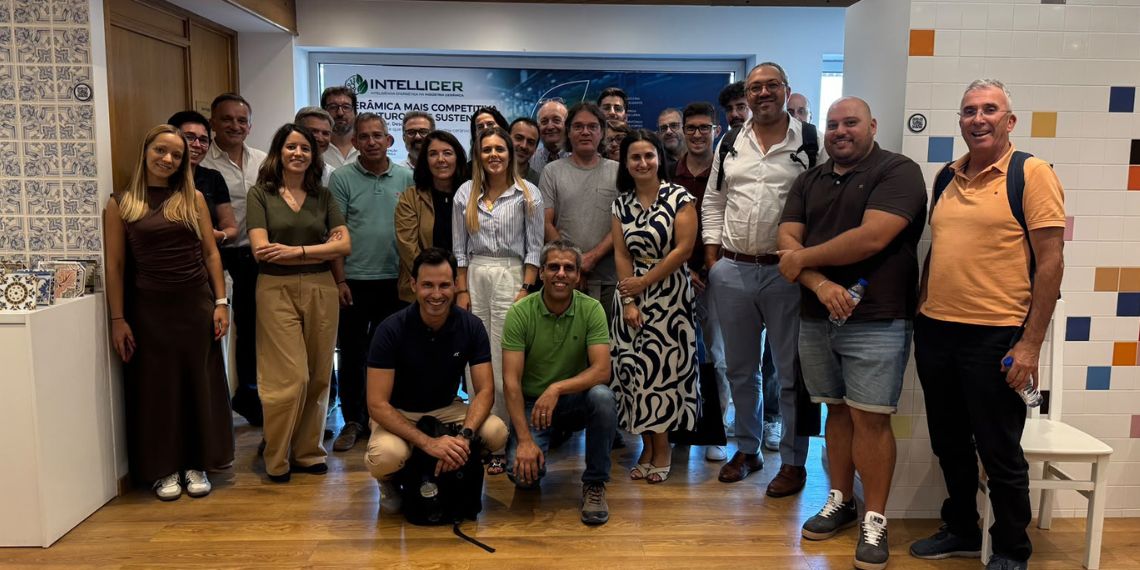
Led by Primus Ceramics, INTELLICER brings together seven companies and three organisations from Portugal’s scientific and technological system. The collaboration seeks to bring the development of new solutions closer to the practical needs of industry; this endeavour began in June 2026 and will run until May 2029.