

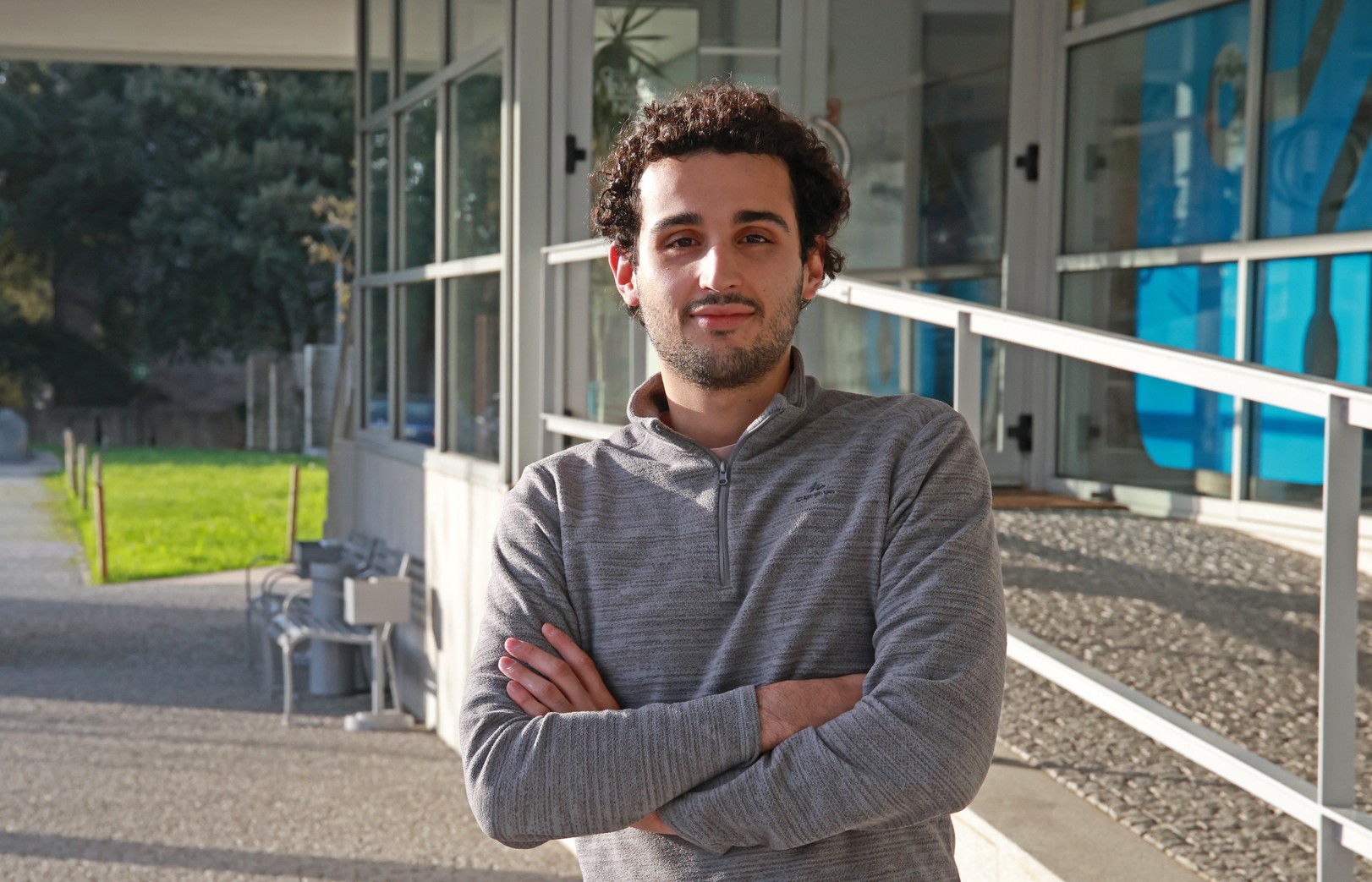
INESC TEC researcher won FEUP award for best PhD thesis research plan
Felipe Coutinho, INESC TEC researcher specialising in Telecommunications and Multimedia, has won the Best Thesis Research Plan (TRP) award.
22nd October 2026
Felipe Coutinho, INESC TEC researcher specialising in Telecommunications and Multimedia, has won the Best Thesis Research Plan (TRP) award, presented to the best thesis research plan in the Doctoral Programme in Electrical and Computer Engineering at the Faculty of Engineering of the University of Porto (FEUP).
Entitled Robust and label-efficient systems for cancer diagnosis through meta-learning, the research plan was prepared and defended during the first year of the programme, under the supervision of Jaime Cardoso, also an INESC TEC researcher. The proposed work aims to improve models for analysing histopathology images used in cancer diagnosis, making the process faster and more effective. Given the size and complexity of these images, their analysis requires specialised machine learning algorithms to automate diagnostic tasks, helping identify cancer subtypes and determine disease severity.
“My thesis addresses this problem through two complementary approaches: on the one hand, selecting the most relevant regions of the images to reduce noise, using advanced optimisation techniques such as meta-learning; and, on the other, enriching the representations learned by the models by integrating the patient’s molecular information,” explained Felipe Coutinho. The goal, he added, is to “improve the models’ ability to capture cancer elements that are relevant to classification and prognosis”.
The award is presented at the beginning of each academic year, with a mark of 18 out of 20 in the research plan defence being one of the eligibility criteria. The winner, announced on 23 September, also received €2K to support the dissemination of the research findings - particularly through participation in scientific conferences and publication in dedicated journals.
The FEUP Doctoral Programme in Electrical and Computer Engineering runs for four years on a full-time basis and aims to promote scientific research that addresses challenges of relevance to society across key areas of electrical and computer engineering.