Cookies
O website necessita de alguns cookies e outros recursos semelhantes para funcionar. Caso o permita, o INESC TEC irá utilizar cookies para recolher dados sobre as suas visitas, contribuindo, assim, para estatísticas agregadas que permitem melhorar o nosso serviço. Ver mais
Aceitar Rejeitar
  • Menu
Apresentação

Laboratório de Software Confiável

No Laboratório de Software Confiável (HASLab), melhorando a prática através da teoria, criamos e implementamos software que vai além da funcionalidade: garantimos que é correto, resiliente e seguro contra falhas e ataques.


A nossa equipa de investigadores, cientistas e engenheiros tem competências em engenharia de software, onde desenvolvemos métodos e ferramentas para conceber e integrar software robusto; sistemas distribuídos, onde exploramos a distribuição e replicação para garantir escalabilidade e confiabilidade; e segurança da informação, onde considerando também os desafios da cibersegurança, fortalecemos os sistemas com protocolos criptográficos avançados e seguros, minimizando vulnerabilidades.


Com uma abordagem multidisciplinar e sustentada por princípios teóricos sólidos, criamos soluções inovadoras para software crítico, infraestruturas cloud seguras e gestão de big data com privacidade, impulsionando avanços científicos, inovação e consultoria de excelência.


Além disso, complementamos a nossa expertise em áreas como interação humano-computador, linguagens de programação, matemática de computação e computação quântica - porque acreditamos que o futuro do software confiável se constrói com conhecimento e inovação.
notícias
Ciência e Engenharia dos Computadores

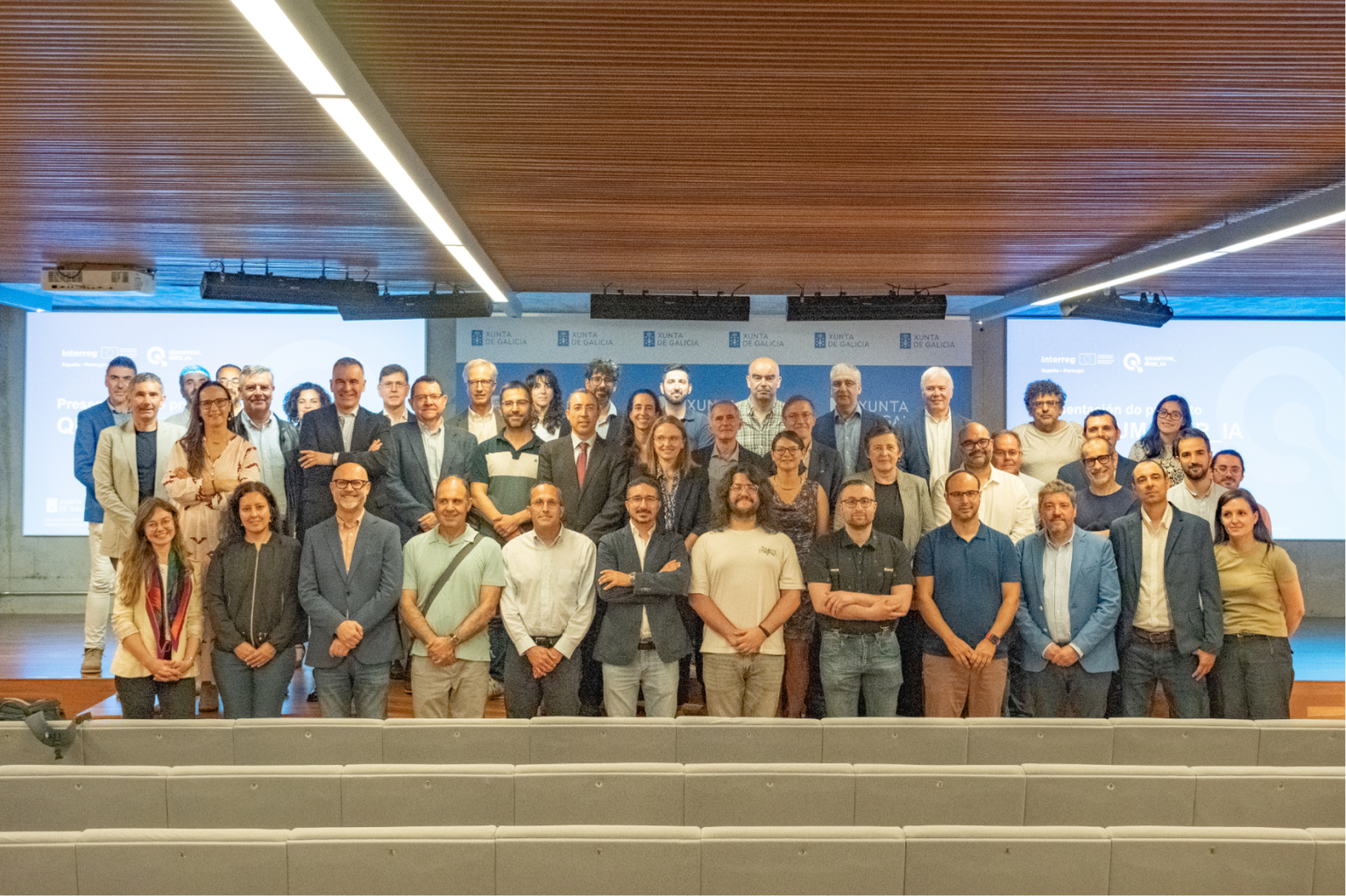
INESC TEC integra consórcio ibérico para impulsionar computação quântica e inteligência artificial

Transformar a Península Ibérica numa referência europeia em tecnologias quânticas e inteligência artificial. É este o objetivo do Quantum IberIA, um projeto de cooperação transfronteiriça que reúne 17 entidades de ambos os países, entre as quais o INESC TEC.  

26 junho 2026

Ciência e Engenharia dos Computadores

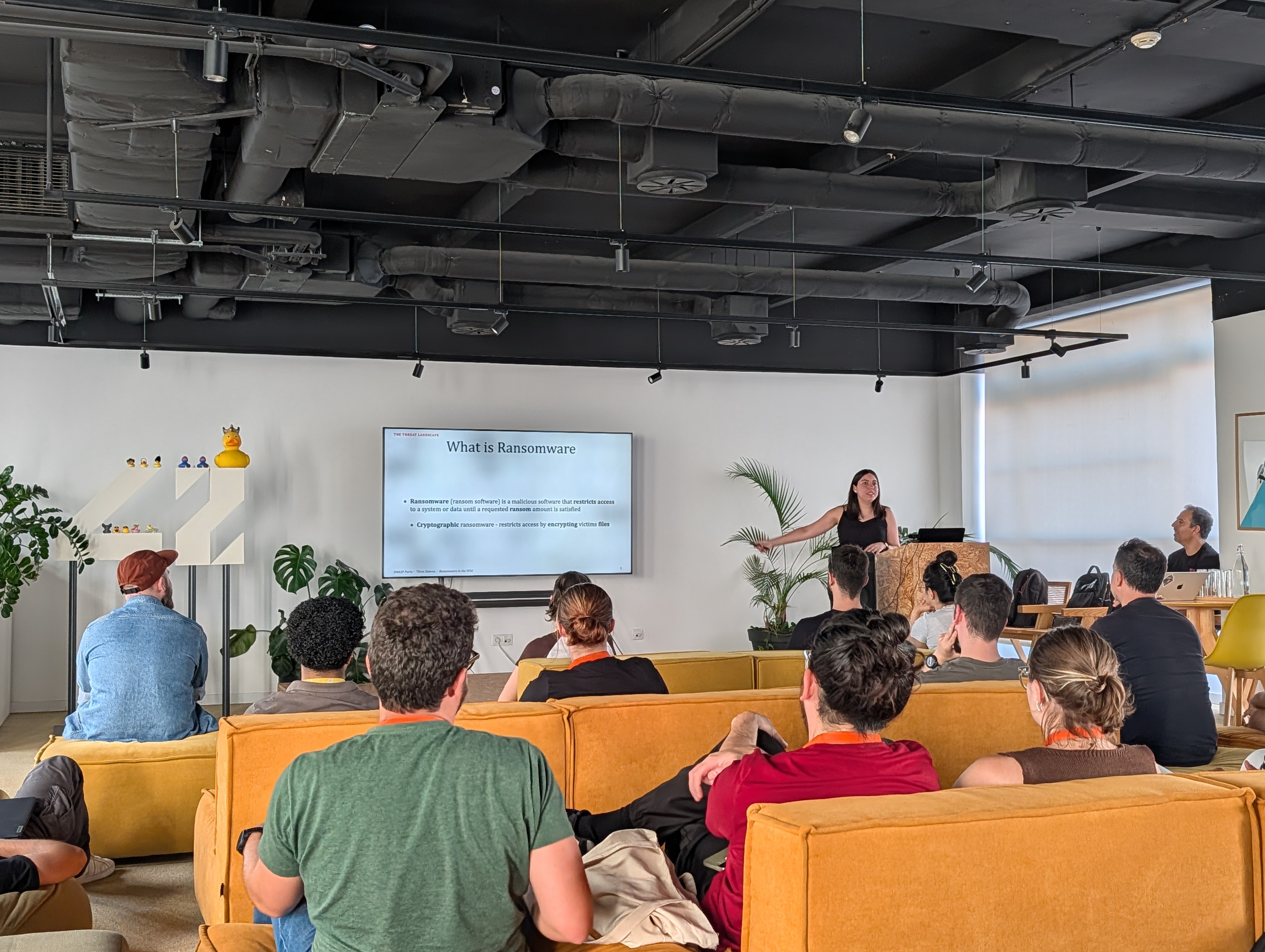
Segurança dos portais de serviços públicos em teste: investigadores do INESC TEC levam resultados a vários palcos

Da avaliação das câmaras municipais portuguesas a mais de três mil portais de serviços públicos em todo o mundo, o trabalho dos investigadores do INESC TEC Diogo Ribeiro e João Marco Silva coloca a cibersegurança da administração pública no centro do debate.   

19 junho 2026

Ciência e Engenharia dos Computadores

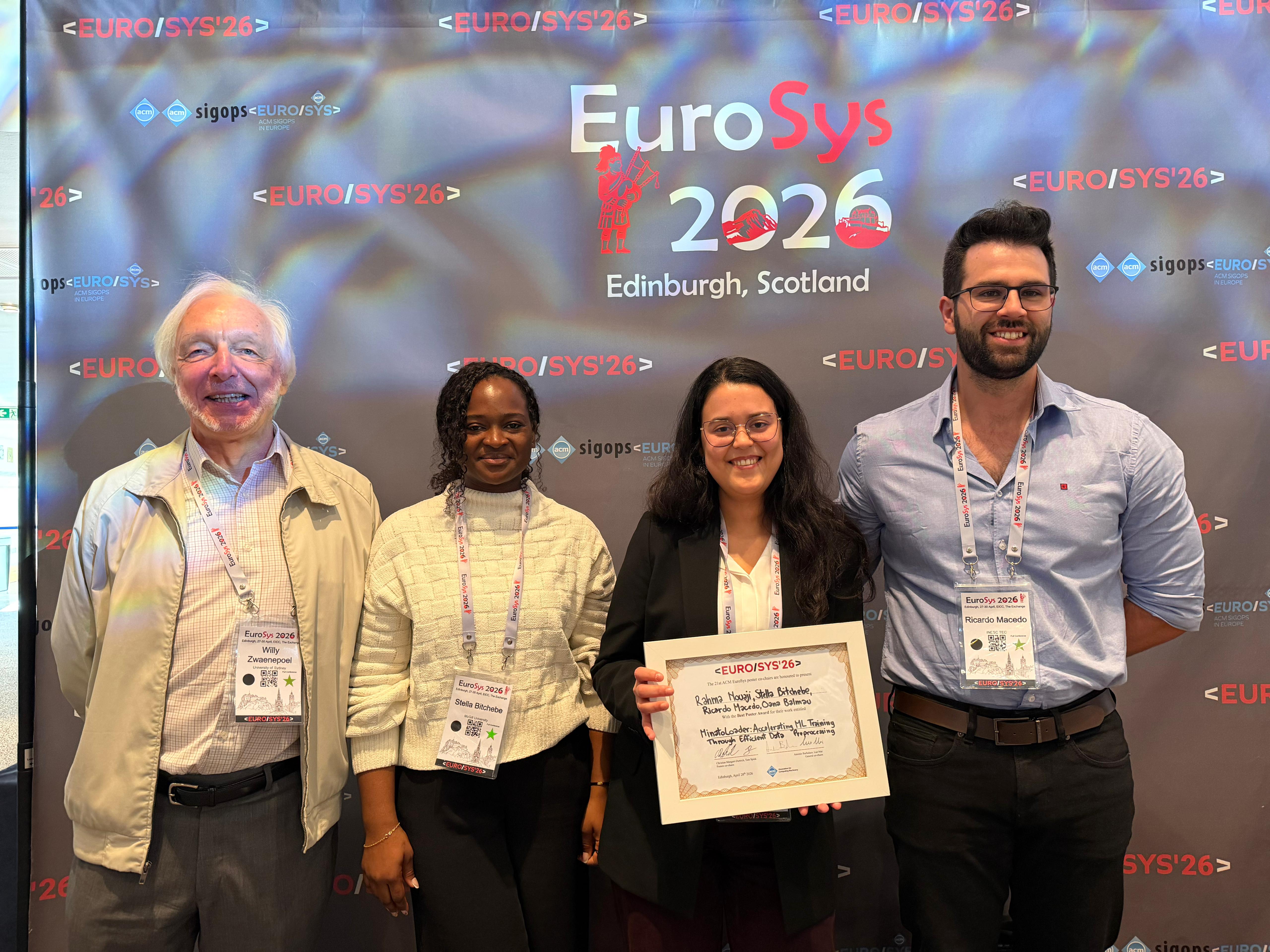
INESC TEC com forte presença na EuroSys 2026

De um prémio de melhor poster a contribuições em quatro frentes distintas. Foi assim que o INESC TEC marcou presença na EuroSys 2026, uma das conferências internacionais mais prestigiadas em sistemas de computação.

15 junho 2026

Investigador do INESC TEC integra direção de organização internacional na área de bases de dados em grafos

Nuno Faria, investigador do INESC TEC, integra a direção do Graph Data Council (GDC), uma organização internacional sem fins lucrativos de referência na área de bases de dados em grafos. O investigador, que é também docente convidado da Escola de Engenharia da Universidade do Minho, é o único português a fazer parte da direção da GDC, da qual fazem parte membros como a Microsoft, a Oracle ou a AWS. 

31 março 2026

Ciência e Engenharia dos Computadores

INESC TEC reforça projeção internacional em HPC no CENTRA 9 e consolida colaborações transnacionais

O INESC TEC participou no CENTRA 9, encontro da rede internacional CENTRA – Collaborations to Enable Transnational Cyberinfrastructure Applications, que reúne centros de investigação, institutos e laboratórios de várias geografias para impulsionar ciberinfraestruturas transnacionais e as suas aplicações, um eixo crítico para o avanço da computação de alto desempenho e dos ecossistemas associados.    

24 fevereiro 2026

Tópicos
de interesse
035

Projetos em destaque

QuantumCLP

Quantum computing optimization for container loading problems: a new frontier in logistics optimization

2026-2027

POISE

Programmable Asynchronous Asymmetric Secure Choreographies

2026-2027

QUANTHOS

QUANTHOS - Fotónica Integrada Topológica Quântica

2026-2027

Rescueware

Cibersegurança e Recuperação de Dados Inteligente e Auto-Configurável para a Resiliência contra Ransomware

2026-2029

HPCTRAIN

EuroHPC traineeships in Hosting Entities, Centres of Excellence and Competence Centres, SMEs and Industry

2026-2029

ADAPQO

Adaptive Query Optimization Architectures to Support Heterogeneous Data Intensive Applications

2025-2026

BANSKY

A paraconsistent inference engine to support research in age-ralated molecular degeneration

2025-2028

JasminCode

Developing Reliable High-performance Assembly Code using Jasmin

2025-2026

TestBed5G_Robotics

Piloto de Robótica Móvel e Cibersegurança em Ambientes Industriais sobre Comunicações 5G – Europneumaq

2025-2026

ATAI

Aplicação de técnicas avançadas na gestão de escalas

2025-2026

BringTrust

Strengthening CI/CD Pipeline Cybersecurity and Safeguarding the Intellectual Property

2025-2028

SafeIaC

SafeIaC: Reliable Analysis and Automated Repair for Infrastructure as Code

2025-2028

INSIEME

Integrated Network for data Space and Interoperable Energy Management in Europe

2025-2028

InfraGov

InfraGov: A Public Framework for Reliable and Secure IT Infrastructure

2025-2026

VeriFixer

VeriFixer: Automated Repair for Verification-Aware Programming Languages

2025-2027

CDMS

Claim Denial Management Solution

2025-2026

ENSCOMP4

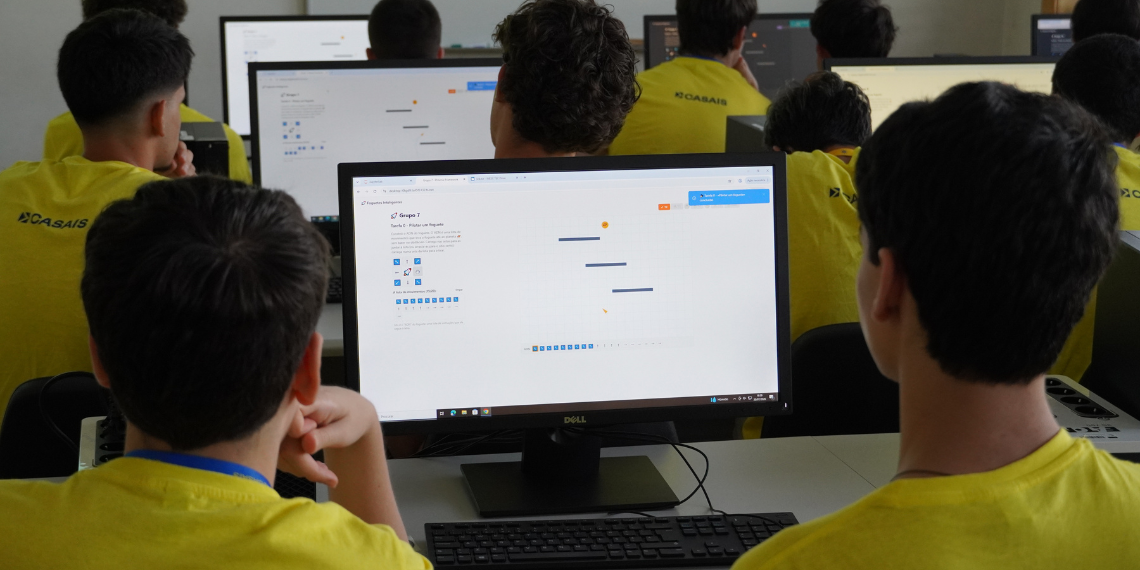
Ensino de Ciência da Computação nas Escolas 4

2024-2026

PeT

PeT - Privacidade e Transparência

2024-2028

EPICURE

High-level specialised application support service in High-Performance Computing (HPC)

2024-2028

BCDSM

BCD.S+M - Sistema Modular de Armazenamento e Gestão de Dados em Blockchain com IA

2024-2027

TwinEU

Digital Twin for Europe

2024-2026

HEDGE_IoT

Holistic Approach towards Empowerment of the DiGitalization of the Energy Ecosystem through adoption of IoT solutions

2024-2027

HANAMI

Hpc AlliaNce for Applications and supercoMputing Innovation: the Europe - Japan collaboration

2024-2027

ATE

Aliança para a Transição Energética

2023-2026

Green_Dat_AI

Energy-efficient AI-ready Data Spaces

2023-2025

EuroCC2

National Competence Centres in the framework of EuroHPC Phase 2

2023-2026

ATTRACT_DIH

Digital Innovation Hub for Artificial Intelligence and High-Performance Computing

2022-2026

NewSpacePortugal

Agenda New Space Portugal

2022-2026

BeFlexible

Boosting engagement to increase flexibility

2022-2026

ENERSHARE

European commoN EneRgy dataSpace framework enabling data sHaring-driven Across- and beyond- eneRgy sErvices

2022-2025

THEIA

Automated Perception Driving

2022-2023

IBEX

Métodos quantitativos para a programação ciber-física: Uma abordagem precisa para racicionar sobre imprecisões na computação ciber-física

2022-2025

IDINA

Identidade Digital Inclusiva Não Autoritativa

2021-2025

DigiLightRail

Solução de Automação do Ciclo de Vida de Projectos de Sinalização Ferroviária

2020-2023

InterConnect

Interoperable Solutions Connecting Smart Homes, Buildings and Grids

2019-2024

Equipa
  • a
  • b
  • c
  • d
  • e
  • f
  • g
  • h
  • i
  • j
  • k
  • l
  • m
  • n
  • o
  • p
  • q
  • r
  • s
  • t
  • u
  • v
  • w
  • x
  • y
  • z
Publicações

HASLab Publicações

Ler todas as publicações

2026

Auto-active verification of distributed systems and specification refinements with Why3-do

Autores
Lourenço, CB; Pinto, JS;

Publicação
SCIENCE OF COMPUTER PROGRAMMING

Abstract
In this paper, we introduce a novel approach for rigorously verifying safety properties of state machine specifications. Our method leverages an auto-active verifier and centers around the use of action functions annotated with contracts. These contracts facilitate inductive invariant checking, ensuring correctness during system execution. Our approach is further supported by the Why3-do library, which extends the Why3 tool's capabilities to verify concurrent and distributed algorithms using state machines. Two distinctive features of Why3-do are: (i) it supports specification refinement through refinement mappings, enabling hierarchical reasoning about distributed algorithms; and (ii) it can be easily extended to make verifying specific classes of systems more convenient. In particular, the library contains models allowing for message-passing algorithms to be described with programmed handlers, assuming different network semantics. A gallery of examples, all verified with Why3 using SMT solvers as proof tools, is also described in the paper. It contains several auto-actively verified concurrent and distributed algorithms, including the Paxos consensus algorithm.

2026

ConflictSync: Bandwidth Efficient Synchronization of Divergent State

Autores
Baquero, C; Gomes, PS; Rodrigues, MB;

Publicação
PaPoC@EuroSys

Abstract
State-based Conflict-Free Replicated Data Types (CRDTs) are widely used in distributed systems to ensure high availability without coordination. However, their naive synchronization strategy, transmitting the full state, incurs high communication costs. In this paper, we: (1) propose ConflictSync, a digest-driven synchronization algorithm, which reduces total data transfer by up to 18× compared to full-state transmissions; (2) formulate state-based CRDT synchronization as set reconciliation over irredundant join decompositions; (3) generalize Rateless Set Reconciliation for variable-sized elements, at the cost of an additional communication step; (4) introduce a new generic set reconciliation solution, integrating Bloom Filters with rateless IBLTs; (5) experimentally evaluate the novel synchronization strategies. © 2026 Copyright held by the owner/author(s).

2026

Bounding Byzantine Impact in Open CRDT Systems

Autores
Baquero, C; Maia, F; Dantas, A; Anta, AF; Frey, D; Sánchez, C; Albouy, T;

Publicação
PaPoC@EuroSys

Abstract
Conflict-free Replicated Data Types (CRDTs) enable available and eventually consistent data replication without coordination, making them well suited for open and partition-prone environments. Recent work has shown that CRDTs can be extended to tolerate Byzantine faults by ensuring that replicas eventually agree on the validity of operations, even in permis-sionless settings. However, validity alone does not prevent a Byzantine participant from inflicting unbounded damage by issuing large volumes of adversarial yet well-formed updates. For example, when editing text, an attacker can easily delete prior text. In this paper, we study how to bound the impact of Byzantine behavior in open CRDT systems. We introduce bounded Byzantine CRDTs, a rate-limiting framework for CRDTs in which each update carries an associated cost that limits the influence of adversarial operations relative to the resources they expend. Overall, this work bridges the gap between Byzantine-Tolerant CRDTs and resource-bounded adversarial models, providing a principled foundation for deploying CRDTs in fully open, adversarial environments. © 2026 Copyright held by the owner/author(s).

2026

“It Makes the Code Clearer”: Why Developers Adopt ModernPython Features in Open Source Projects

Autores
Mendonça, W; Leite, M; Romeiro, O; Carvalho, F; Bonifácio, R; Monteiro, E; Pinto, G; Accioly, P; Saraiva, J;

Publicação

Abstract
Python has become one of the most widely used programming languages, yet the transition fromPython 2 to 3 introduced a tension between innovation and compatibility. While new featuressuch as formatted string literals, type annotations, and structural pattern matching expanded thelanguage’s expressiveness, they also required substantial adaptation of legacy code. Despite theincreasing relevance of these features, there is still limited empirical evidence on how modernPython features are being adopted in practice—when developers start using them, how adoptionunfolds over time, and what motivations drive these decisions. This paper addresses this gapthrough a large-scale empirical study of 424 open-source Python projects. Our analysis revealstwo distinct adoption patterns: rapid adoption of small syntactic improvements and slowerintegration of features that require extensive refactoring or ecosystem support. On average,projects begin using with new features within 16 months after their release but take roughly 4years to achieve broader and sustained adoption. This observation may be partially explainedby the transition from Python 2 to 3, which did not preserve full backward compatibility.Complementary qualitative evidence from pull-request discussions indicates that developers areprimarily motivated to rejuvenate Python code through improvements in comprehension, safety,and performance, yet often constrained by compatibility requirements and maintenance costs.Together, these findings offer practical insights for tool developers and maintainers seeking tobalance innovation and stability in the ongoing rejuvenation of Python source code.

2026

Foreword to the special section on recent advances in graphics and interaction (RAGI 2025)

Autores
Alves, T; Campos, JC; Chalmers, A;

Publicação
COMPUTERS & GRAPHICS-UK

Abstract
[No abstract available]