

- Menu
- Passa a palavra.
Partilha esta página. - Linked in
- Copiar Url
-
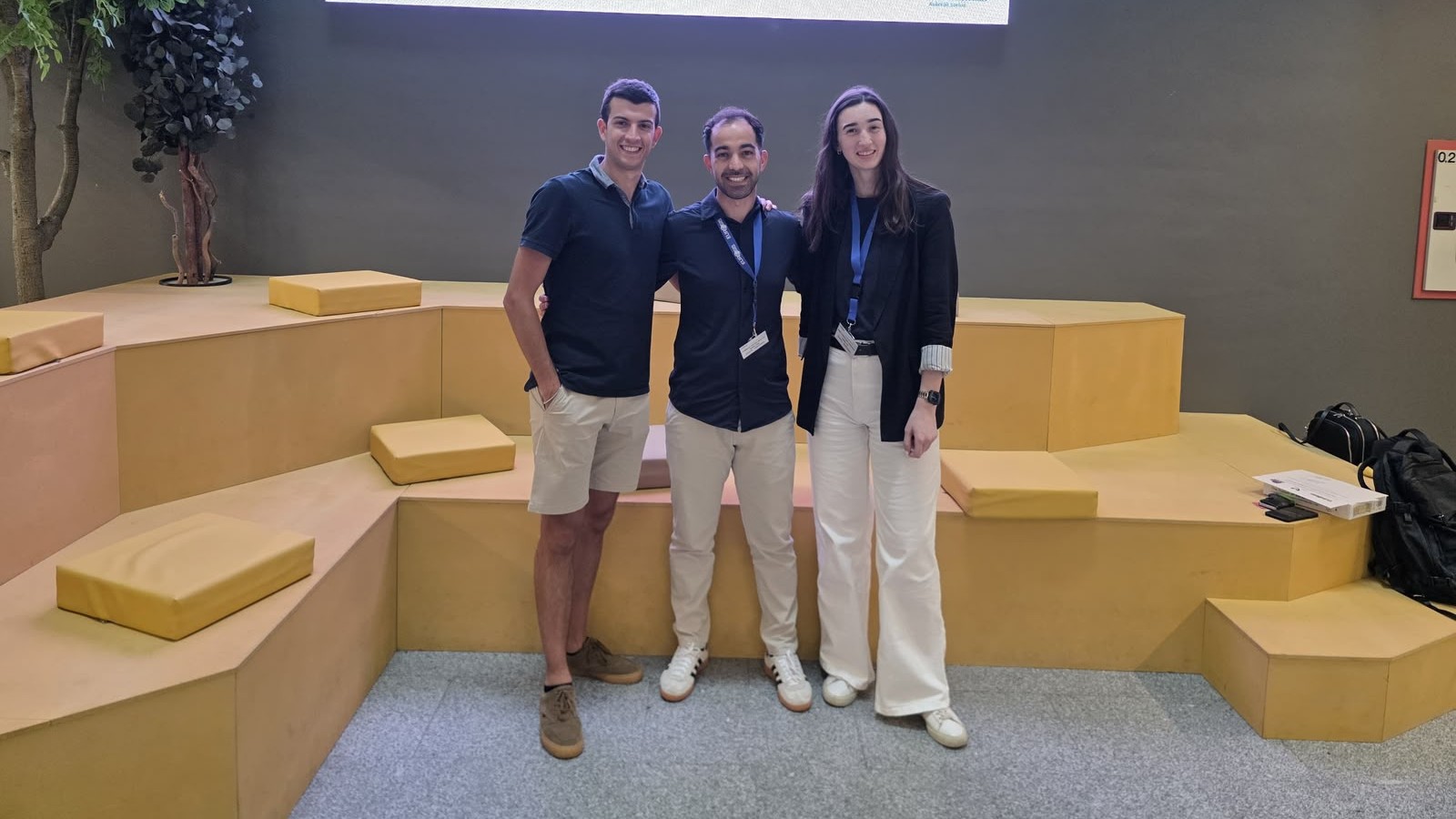
Um estudo que resultou no desenvolvimento de um modelo que permite reproduzir de forma realista os fluxos de recolha, transporte, consolidação e encaminhamento de componentes ao longo da cadeia de valor foi distinguido na Industrial Simulation Conference (ISC’2026). A ferramenta, desenvolvida pelo INESC TEC, permite testar virtualmente diferentes configurações da rede logística, avaliar impactos económicos, ambientais e operacionais e comparar alternativas de forma quantitativa, apoiando as empresas no processo de tomada de decisão.
19 junho 2026
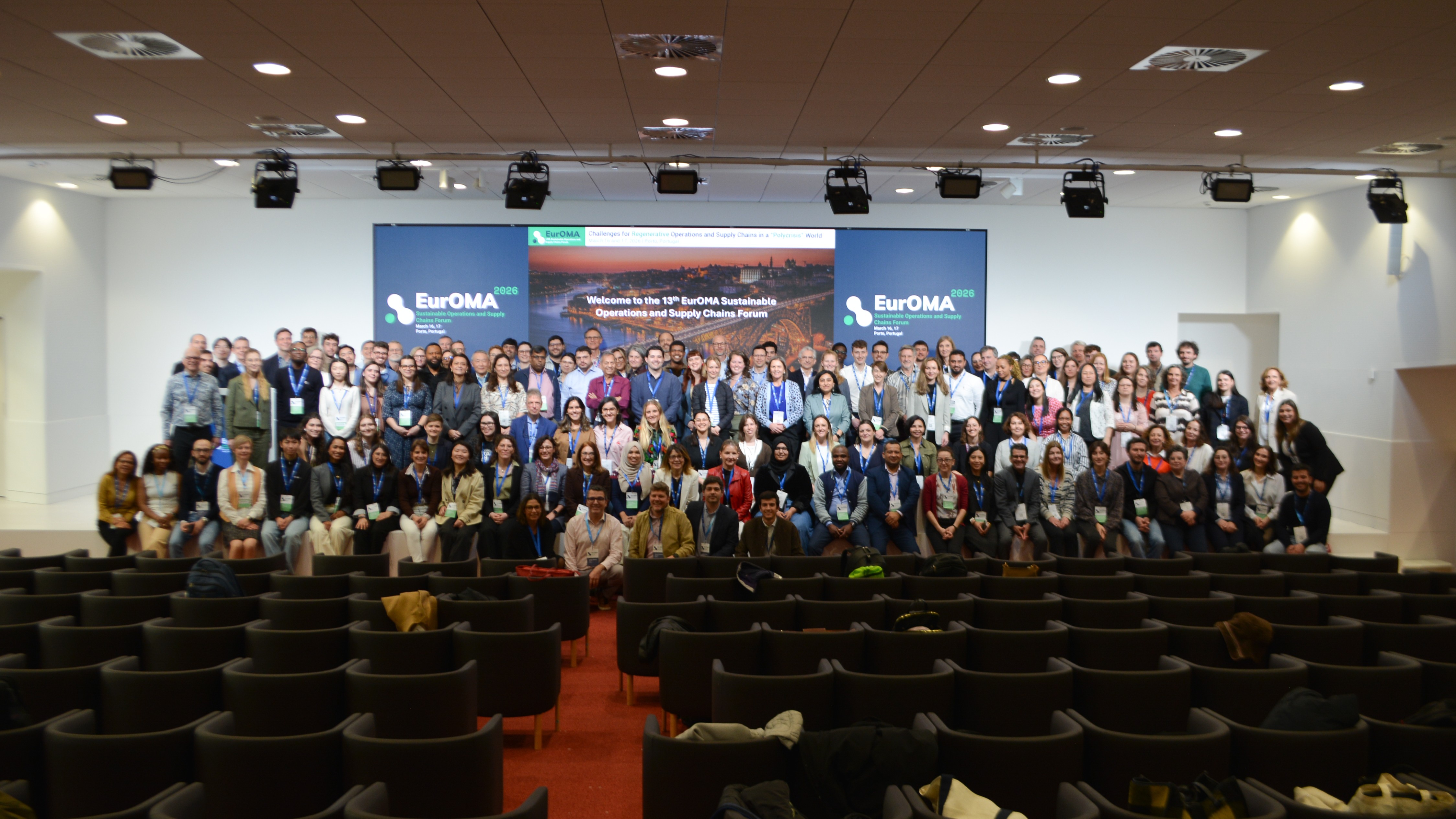
O INESC TEC e a Porto Business School trouxeram a Portugal duas centenas de especialistas, provenientes de mais de 20 países, para debater os desafios da sustentabilidade nas áreas de gestão de operações e cadeias de abastecimento. A 13ª edição do EurOMA Sustainable Operations and Supply Chains Forum focou-se na importância das abordagens regenerativas e no conceito de “policrise”, caracterizado pela intensificação e sobreposição de crises globais.
24 março 2026

É possível comer de forma mais saudável e, ao mesmo tempo, reduzir significativamente o impacto ambiental da alimentação. Esta é a principal conclusão de um estudo conduzido por investigadores do INESC TEC, do Centro de Investigação em Produção Agroalimentar Sustentável da Universidade do Porto (GreenUPorto) e do Laboratório de Engenharia de Processos, Ambiente, Biotecnologia e Energia (LEPABE/ALiCE). O estudo analisou os padrões alimentares da população portuguesa e mostrou que as dietas consideradas mais sustentáveis apresentaram até 33% menos emissões de carbono, 36% menos consumo de água e cerca de 50% menos de ocupação de solo do que as dietas menos sustentáveis, ao mesmo tempo que apresentam uma qualidade nutricional 87% superior.
27 fevereiro 2026
Cercas Virtuais Dinâmicas - Controlo e monitorização remota de pastorício em regime livre através de sistema de orientação de animais não intrusivo
2025-2028
Bolsa de horas para apoio técnico na transferência de tecnologia do software de gestão da linha NDTech
2025-2026
FLEXIBLE REMANUFACTURING USING AI AND ADVANCED ROBOTICS FOR CIRCULAR VALUE CHAINS IN EU INDUSTRY
2024-2027
Evaluation of automated logistic scenarios for a structural steel production line using Simulation
2023-2026
Investigador Sénior
Investigador Colaborador Externo
Investigador Sénior
Responsável de Área
Coordenador de Centro
Coordenador de Centro
Investigador Sénior
Assistente de Investigação
Estudante Externo
Investigador Colaborador Externo
Assistente de Investigação
Estudante Externo
Investigador Sénior
Investigador Colaborador Externo
Investigador Auxiliar
Assistente de Investigação
Assistente de Investigação
Assistente de Investigação
Investigador Auxiliar
Assistente de Investigação
Investigador Sénior
Assistente de Investigação
Assistente de Investigação
Assistente de Investigação
Investigador Sénior
Assistente de Investigação
Investigador Sénior
Adjunto da Coordenação de Centro
Responsável de Área
Investigador Colaborador Externo
Estudante Externo
Investigador Colaborador Externo
Investigador Colaborador Externo
Investigador Colaborador Externo
Assistente de Investigação
Investigador
Investigador Auxiliar
Investigador Coordenador
Investigador Sénior
Investigador Colaborador Externo
Investigador Coordenador
Investigador Sénior
Assistente de Investigação
Assistente de Investigação
Investigador Colaborador Externo
Investigador Colaborador Externo
Assistente de Investigação
Estudante Externo
Investigador Colaborador Externo
Investigador Afiliado
Investigador Colaborador Externo
Investigador Sénior
Assistente de Investigação
Investigador Colaborador Externo
Investigador Sénior
Assistente de Investigação
Investigador Sénior
Assistente Administrativo
Estudante Externo
Estudante Externo
Assistente de Investigação
Investigador Colaborador Externo
Investigador Sénior
Investigador Colaborador Externo
Assistente de Investigação
Investigador Sénior
Investigador Sénior
Investigador Auxiliar
Estudante Externo
Assistente de Investigação
Assistente de Investigação
Investigador Colaborador Externo
Assistente de Investigação
Investigador Sénior
Investigador
Investigador Auxiliar
Estudante Externo
Estudante Externo
Investigador Colaborador Externo
Investigador Colaborador Externo
Estudante Externo
Responsável de Área
Assistente de Investigação
Investigador Colaborador Externo
Estudante Externo
Investigador Colaborador Externo
Assistente de Investigação
Assistente de Investigação
Investigador Sénior
Assistente de Investigação
Investigador Colaborador Externo
Estudante Externo
Assistente de Investigação
Investigador Colaborador Externo
Investigador Colaborador Externo
Assistente de Investigação
SYSTEM Publicações
2026
Autores
Mahani, SF; Oliveira, BB; Patrício, L; Miguéis, V; Carravilla, MA; Oliveira, JF;
Publicação
TRANSPORTATION
Abstract
Achieving sustainable urban mobility requires shifting travelers toward public transport. However, policies often assume uniform preferences, leaving a critical gap in understanding how different travelers prioritize mobility factors. To address this, the study examines behavioral heterogeneity among urban travelers using a data-driven clustering approach based on the relative importance assigned to cost, comfort, environmental sustainability, and flexibility. Using data from 698 respondents in the Asprela area of Porto, Portugal, a mixed-use district combining universities, hospitals, and commercial facilities, the study applies principal component analysis (PCA) and K-means clustering to derive distinct traveler profiles. Unlike segmentation based solely on socio-demographics or observed mode choice, this approach groups individuals according to their underlying value structures. Six clusters were identified, ranging from car-dependent, comfort-oriented users to environmentally conscious and low-engagement groups. The findings show that one-size-fits-all policies are unlikely to address behavioral diversity effectively. Building on these insights, the study proposes tailored and cross-cutting policies to enhance the attractiveness of public transport and promote sustainability. By uncovering latent preference structures, the study contributes to more inclusive and value-informed mobility planning.
2026
Autores
Cherri, LH; Cherri, AC; Silva, EF; Oliveira, JF;
Publicação
European Journal of Operational Research
Abstract
Cutting and packing problems have been widely studied because of their potential to improve industrial processes economically and environmentally. While many variants have been studied, some, particularly those with practical features necessary for industrial adoption, remain poorly addressed by exact methods. One such variant is the irregular packing (or nesting) problem, where pieces and/or stock materials have irregular shapes. A key industrial requirement - guillotinable cutting patterns - has rarely been studied and only with heuristic methods. This paper proposes a branch-and-cut approach based on the dotted board model to address guillotinability in irregular packing. The method iteratively identifies and eliminates non-guillotinable patterns by introducing specific cuts. These are derived using D-functions and formed by cliques in an incompatibility graph of piece placements. The approach is adapted to four variants of the problem: Irregular Strip Packing, Irregular Placement, Irregular Knapsack, and Irregular Identical Item Packing. Computational experiments were conducted using benchmark instances across the four problem variants. The method found optimal solutions for most instances. Those instances that remained unsolved or for which optimality was not confirmed indicate areas for further research. A limitation of the method is that the nesting model restricts piece placement to discrete points. Extending the model to continuous domains is a significant but promising challenge for future work. © 2026 The Authors
2026
Autores
Freitas, F; Zimmermann, R; Freires, G; Couto, F; Fontes, C; Soares, AL; Dalmarco, G; Rhodes, D; Gomes, J;
Publicação
HYBRID HUMAN-AI COLLABORATIVE NETWORKS, PRO-VE 2025, PT I
Abstract
The integration of AI in supply chains offers opportunities to enhance efficiency, sustainability, and decision-making. However, effective implementation requires attention to both technical and socio-technical aspects. This study examines AI maturity in the pulp and paper sector using the SC-STAI profiling tool, assessing AI integration across technical, social, human, and organizational domains. Based on nine case studies from Brazil and Portugal, the research identifies key areas for improvement and highlights uneven AI adoption. Findings show that performance and resilience are most impacted, while job role adoption remains the lowest. The study emphasizes the importance of Socio-Technical AI Maturity Models in guiding responsible AI adoption and improving socio-technical alignment in supply chains, contributing to a better understanding of AI readiness in traditional industries and demonstrating the SC-STAI tool's applicability for strategic AI planning.
2026
Autores
Silva, RR; Silva, HD; Soares, AL;
Publicação
HYBRID HUMAN-AI COLLABORATIVE NETWORKS, PRO-VE 2025, PT II
Abstract
As organizations navigate through complex and collaborative digital environments, Generative AI (GenAI) emerges as a transformative force for Knowledge Management (KM) processes. This paper highlights how GenAI technologies impact collaborative KM processes across individual, intraorganizational, and inter-organizational levels within the evolving paradigm of Industry 5.0 (i5.0). Through a literature review, the study explores how GenAI augments human cognition, enhances knowledge creation and sharing, and fosters organizational adaptability and innovation. The findings highlight GenAI's potential as cognitive partner, streamlining information flows, and improving decision-making across collaborative networks. However, challenges such as over-reliance, ethical risks, and the decline of critical human skills are also discussed. Furthermore, the paper identifies the evolution and gaps in current literature on Collaborative Networks (CNs) regarding the integration of AI technologies. It contributes to the ongoing discussion towards a socio-technical transformation while also providing an overview for rethinking collaboration and social strategies in the GenAI era.
2026
Autores
Sousa, J; Oliveira, F; Carneiro, D; Soares, A; Silva, B;
Publicação
HYBRID HUMAN-AI COLLABORATIVE NETWORKS, PRO-VE 2025, PT II
Abstract
The integration of AI into organizational settings leads to a growing need for hybrid human-AI collaborative approaches, necessary due to the increasing autonomy, impact and responsibility AI-based solutions have. Moreover, to ensure a sustainable integration into existing processes, such approaches must be context-aware, transparent, and human-centric. In line with the Industry 5.0 paradigm, this paper presents a novel Multi-Agent System architecture that enables meaningful collaboration between human and artificial agents through a socio-technical design approach. The proposed architecture is grounded in a structured, real-time context stream derived from organizational data sources, which semantically describe human actors, processes, and industrial resources. Central to this system is a set of four core LLM-based agents, each responsible for orchestrating hybrid human-AI tasks along distinct dimensions of timing, role selection, resource allocation, and execution sequencing. To assess the feasibility and effectiveness of the architecture, we report on an early-stage validation conducted within a representative industrial use case in the automotive sector, focused on information retrieval. In this use case, the architecture was tasked with answering a set of representative, domain-specific questions by dynamically interacting with distributed industrial databases. Results demonstrate the architecture's ability to coordinate relevant human and artificial agents, retrieve semantically-relevant data, and present explainable outputs, showcasing its potential for supporting decision-making processes in hybrid collaborative networks.
The access to the final selection minute is only available to applicants.
Please check the confirmation e-mail of your application to obtain the access code.